
Hands On: NZXT C850 SFX Gold Power Supply
As we’ve continued our search for the perfect unit to update our aged motherboard testing platform, we’ve continued considering whether we even need a full-sized model: The shorter depth of SFX provides more room to install modular cables, and our case’s power supply location is a great match for the shorter cables that SFX usually includes. As behind-motherboard power supply bays continue to dominate contemporary case design (as seen in our Sama V62 White review), that last observation might strike a chord with a few more builders.
| Model | NZXT C850 SFX Gold (PS-2402) | ASRock SL-1200GW (90-UXS120-GFUABA) | Toughpower SFX Platinum (PS-STP-1000FNFAPU-1) | InWin P105II (IW-PS-PII1050W) |
| +12V Max (Amps) | 70.83A | 100A | 83.3A | 87.5A |
| 12VHPWR | 1 | 2 | 1 | 1 |
| 6+2 Pin PCIe | 3 | 3 | 4 | 3 |
| EPS12V | 1 | 2 | 2 | 2 |
| 80Plus Cert. | Gold | Gold | Platinum | Platinum |
| Weight | 0.96kg | 1.87kg | 1.09kg | 1.70kg |
| Depth | 100mm | 150mm | 104mm | 150mm |
| Warranty | 10-years | 10-years | 7-years | 10-years |
| Price | $170 | $160 | $180 | $170 |
Find it at Amazon

(click for availability)
The C850 XFS Gold is actually the second SFX unit we’ve tried, and its largest charted shortcoming compared to the ToughPower SFX Platinum is its lack of a second EPS12V (8-pin ATX12V) lead: Most mini ITX motherboards only have one connector, but we’ve owned some Micro ATX PCs that were limited to SFX…and we already mentioned a reason why SFX models might be useful for a builder of a full ATX unit. And that brings us to the second physical advantage of the competing SFX Platinum: It included a full ATX (ie, PS2 pattern) adapter plate for use with full-sized cases, whereas the C850 SFX Gold does not.
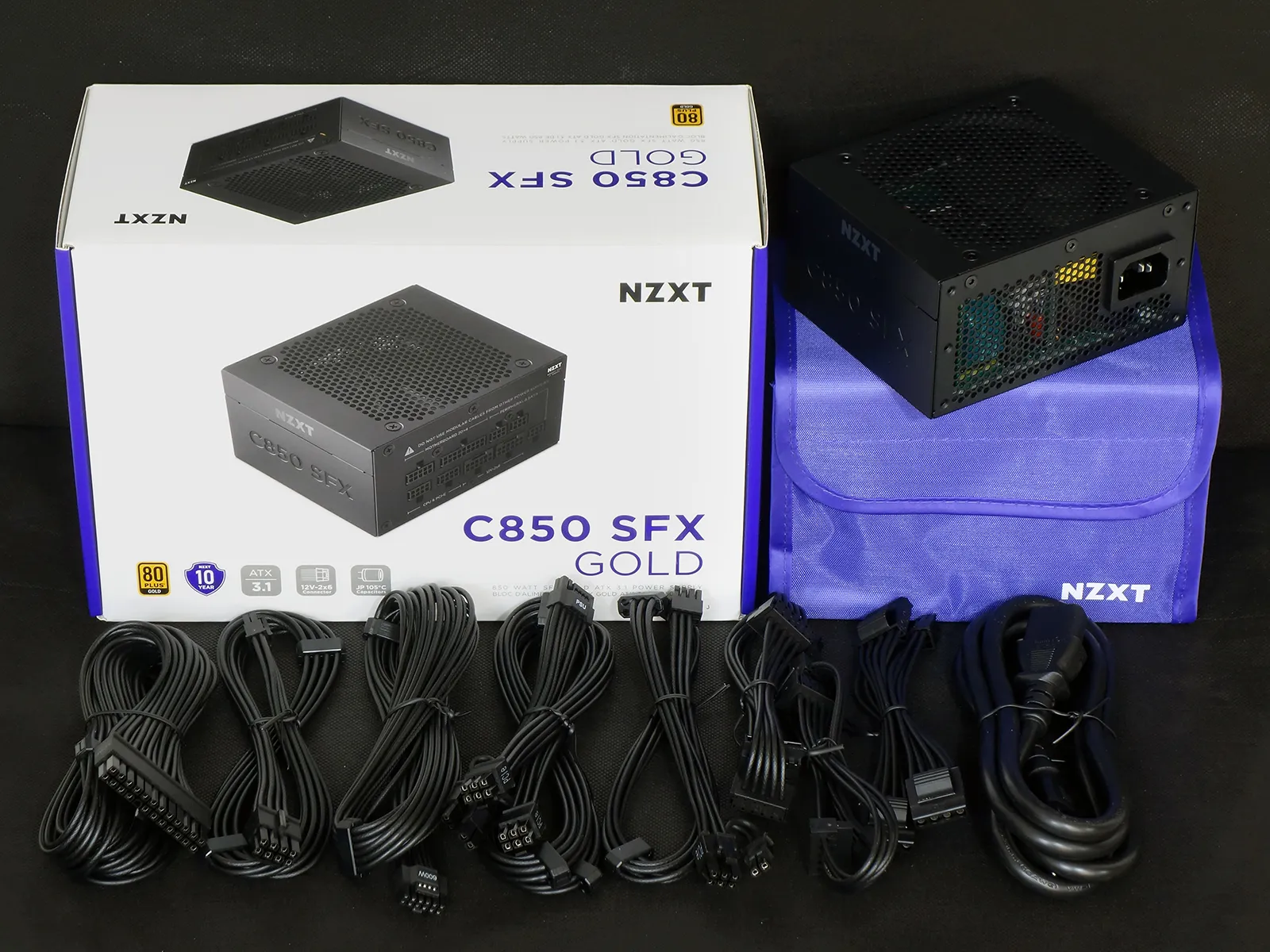
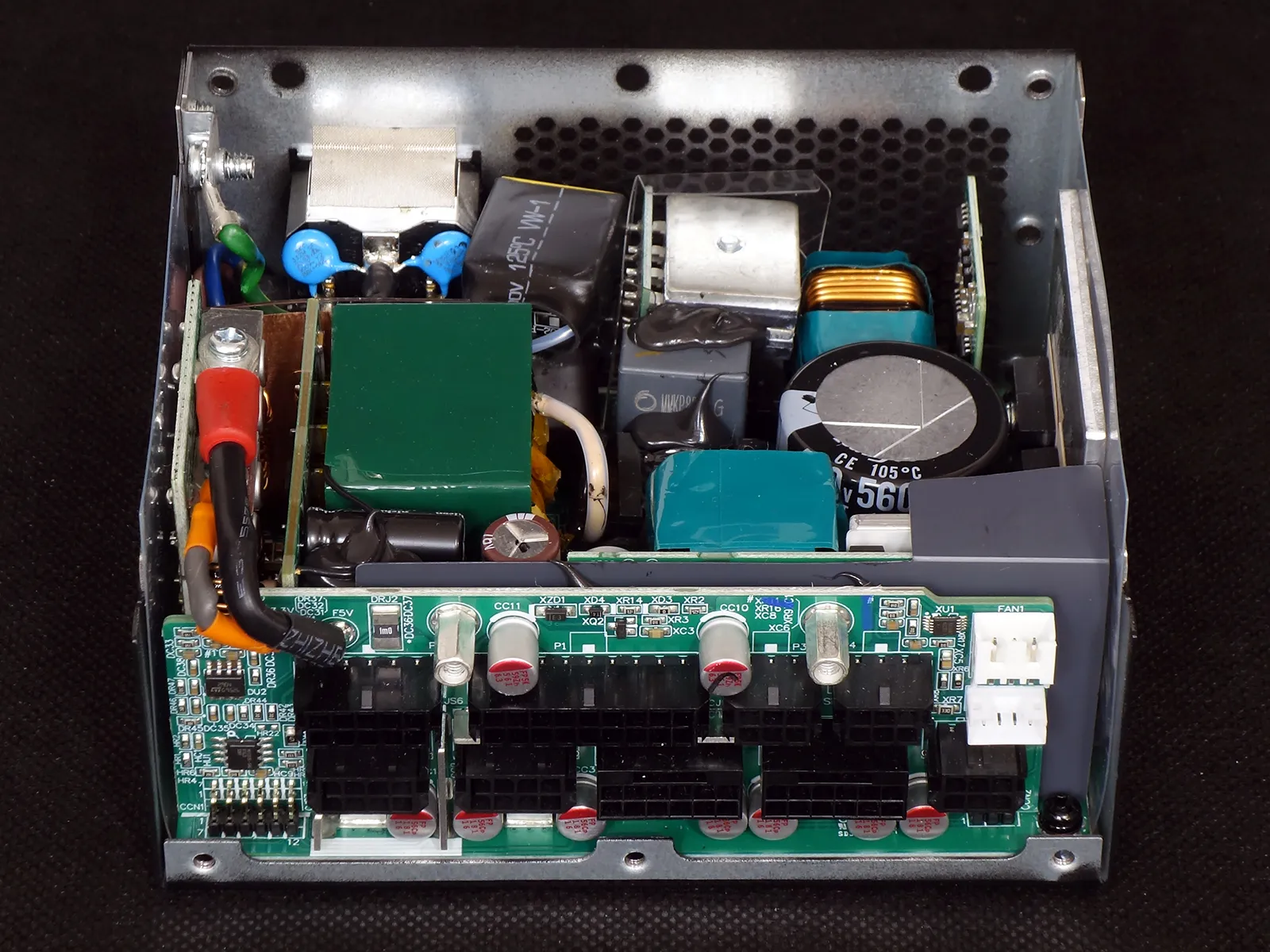
It’s not as if the C850 SFX lacked the outputs needed to feed the big voltage regulator of a full-featured ATX or Micro ATX motherboard, but that NZXT apparently decided that the user base of that configuration would be too small to justify the cost of adding cables. Just take a look at the back of the unit: two eight-pin power connectors and two 12V-2×6 (updated 12VHPWR) connect a 12V rail that has over 70A of available power.
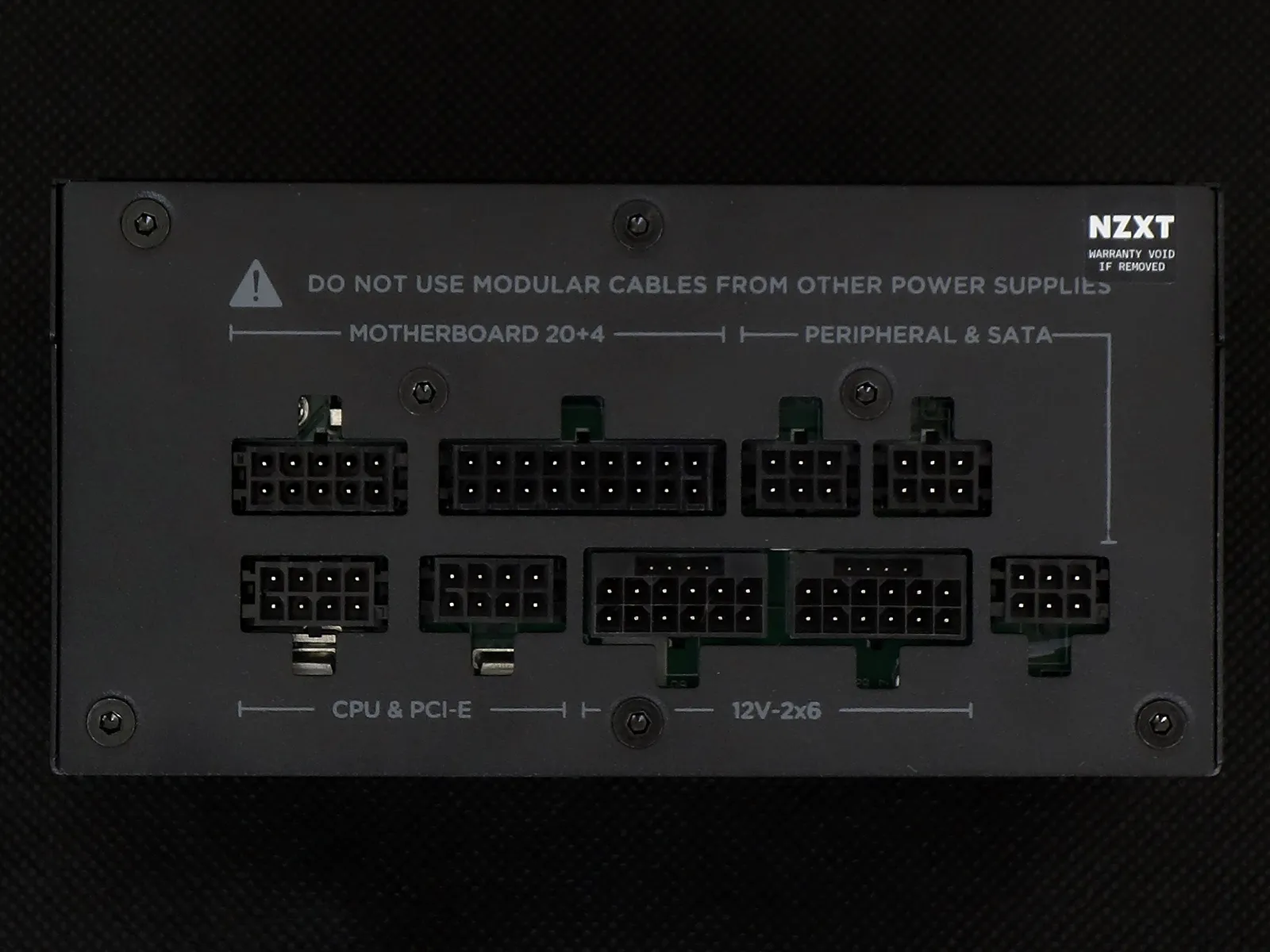
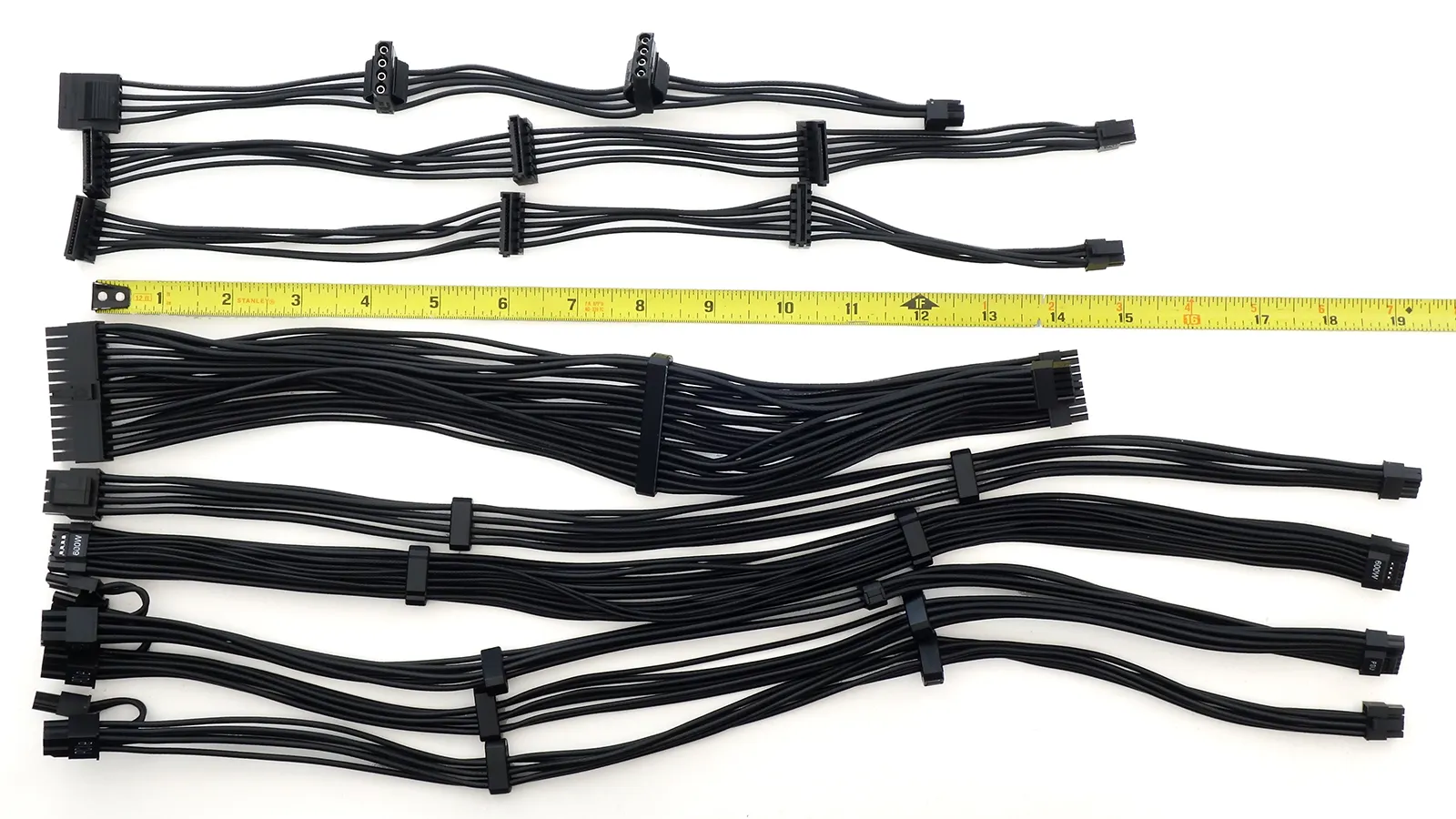
The cable pack includes an ATA and two SATA triple-device cables, a 24-pin EPS/ATX main cable, a divisible (4+4 pin) EPS12V/ATX12V lead, a 12V-2×6 native cable, a 12V-2×6 to dual 6+2-pin PCIe graphics card adapter cable and a single-end 6+2-pin PCIe power cable. This cable combination makes it hard for us to imagine what NZXT had in mind when it put a second 12V-2×6 output on the casing, but we’re open to (your) creative interpretations!
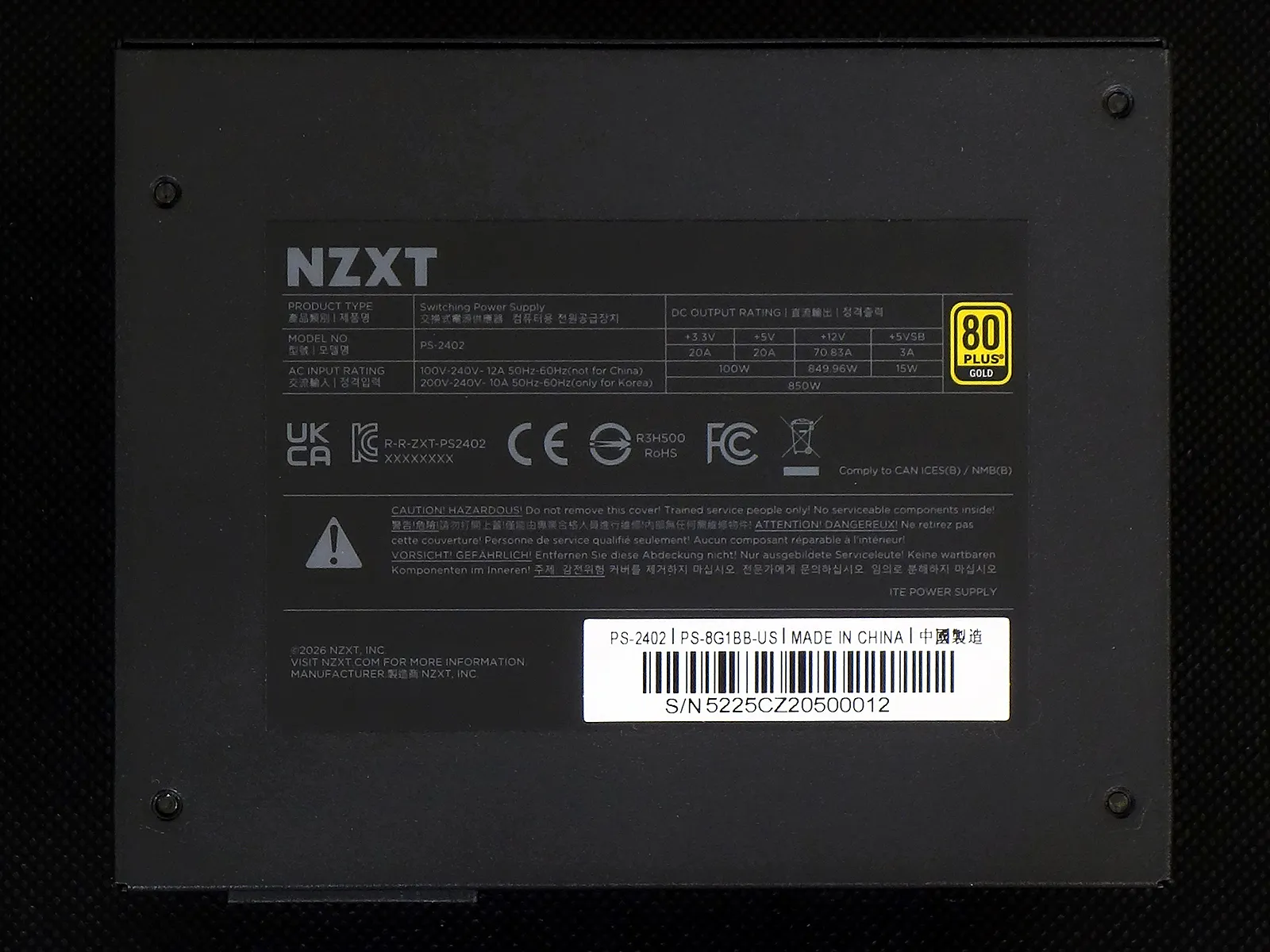
It wears the 80 Plus Gold badge, but we didn’t find the model number PS-2402 anywhere on the certifier’s website, and the competing Cybenetics certification refers only to the product name (C850 SFX Gold) which could potentially include multiple versions with slightly different specifications. Regardless of that uncertainty, what the label does tell us is that all of its rated output is available from the 12V rail, and that lesser rails detract power from it.
Under the cover we find a circuit board filled with top-quality components and a Hong Hua HA9215SH12FD-F00 (92mm-format by 15mm thick) fan. We’ve seen mixed regard for the acoustics of these fans, but the unit’s controller kept this one spinning at a quietly slow speed throughout our test.
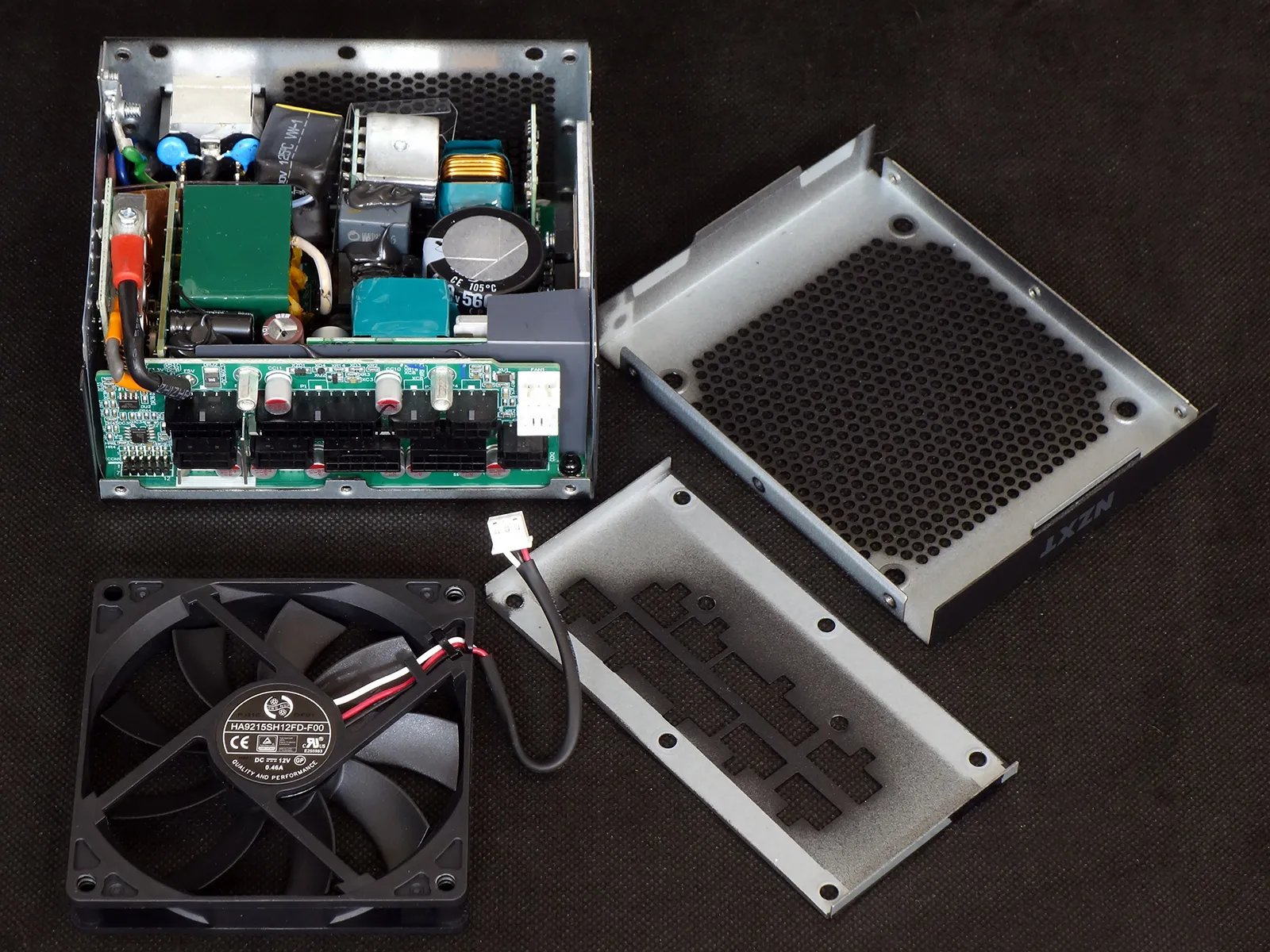
The fairly short soldered-on input power leads make particularly difficult disassembly for further inspection, but Cybenetic’s description of a half-bridge LLC resonant design using dual Infineon active PCC MOSFETs, boost diodes and main switches, which feeds 12V to secondary side DC-DC converters that are equipped with six Rubycon, eight Nichicon and nine Nippon Chemicon caps, matches the limited visual inspection that we made using a flashlight.
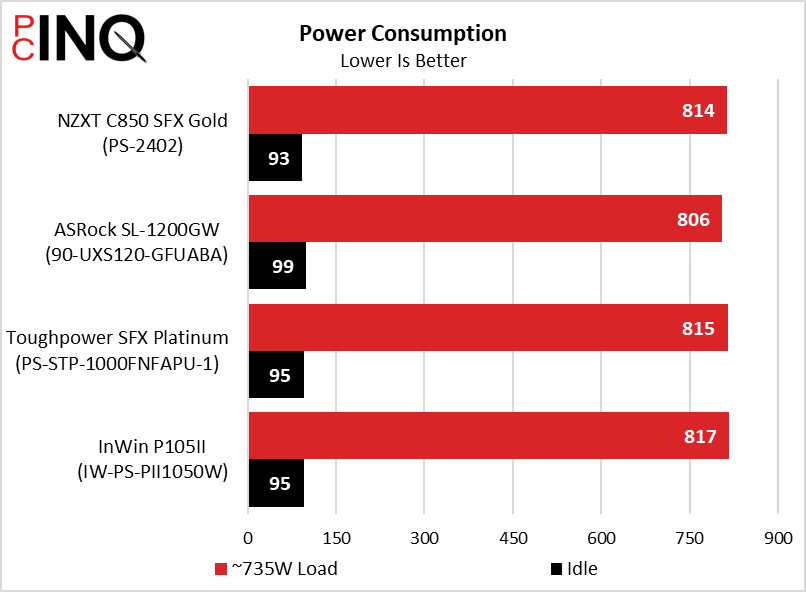
We’re using the following configuration to generate an approximate 735W load from which we can compare the power consumption of NZXT’s C850 SFX Gold to that of our four most-recent samples.
| System Configuration | |
| CPU | Intel Core i9-13900K: 24C/32T, 3.0-5.8 GHz, 36 MB L3 Cache, LGA 1700, Locked at 5.0P/4.0E GHz, 1.25V Core |
| CPU Cooler | Alphacool Core 1 LT Aurora, Eisbecher D5 150mm, NexXxoS UT60 X-Flow 240mm |
| Motherboard | ASRock Z790 Taichi Carrara, BIOS 12.13 (04/23/2024) |
| RAM | Crucial Pro OC Gaming Edition DDR5-6400 32GB Kit |
| Graphics | ASRock RX 7700 XT Phantom Gaming 12GB OC 2276 MHz GPU, 2599 MHz Boost, GDDR6-18000 |
| System Drive | Crucial T700 PCIe Gen5 2TB M.2 SSD |
| Test Condition | |
| CPU Load | Prime95 v30.8 build 16 Torture Test, Small FFTs |
| GPU Load | Furmark 2.7.0.0 GL Test, 1920×1080 |
The C850 SFX Gold saved us a watt or two compared to the similarly-sized ToughPower SFX Platinum 1000W, though the later’s higher maximum output might have pushed it further outside the design’s maximum efficiency range.
We also observed that the single EPS12V line ran at over 50° which, though not dangerously hot, seems annoyingly warm given that our motherboard and the power supply would both have been cable of using a second cable had one been included. Supposing that you won’t push past our power use (or that your motherboard can’t accept the second cable), the single EPS12V is still sufficient.
| NZXT C850 SFX Gold (PS-2402 / PS-8G1BB-US) | |
| Pros | Cons |
| Good efficiency Low noise Compact size | Only $10 cheaper than 1000W rival |
| The Verdict | |
| The C850 SFX Gold’s excellent cable design and great overall quality are undermined only slightly by the company’s cable choices | |
We find no serious flaw in the C850 SFX Gold, but given that its closest competitor in today’s match includes all the cables and adapters we need while adding 18% more power for only $10 more cost…we’d rather not ask NZXT to send a second CPU cable. Those building an SFX system with a single EPS12V/ATX12V-connector motherboard can ignore such considerations.
Find it at Amazon
(click for availability)


