
Patriot Viper VP4300 Lite Gen4 NVMe (2026) SSD Review
Nothing makes us do a double take faster than a hardware change, so when we saw other sites reporting that Patriot’s latest Viper VP4300 Lite production was shipping with different parts than its earlier review samples, we had to take a look.
Patriot Viper VP4300 Lite (VP4300L1TBM28H) | |
| Form Factor | M.2 2280 |
| Capacity | 1.0TB |
| Interface | PCIe 4.0 x4 (NVMe 1.4) |
| Controller | Maxio MAP1602A-F3C |
| Flash | YMTC 232L TLC |
| Cache | HMB |
| Endurance | 800 TBW |
| Warranty | 5-years |
| Price | $175 |

Viper VP4300 Lite Features
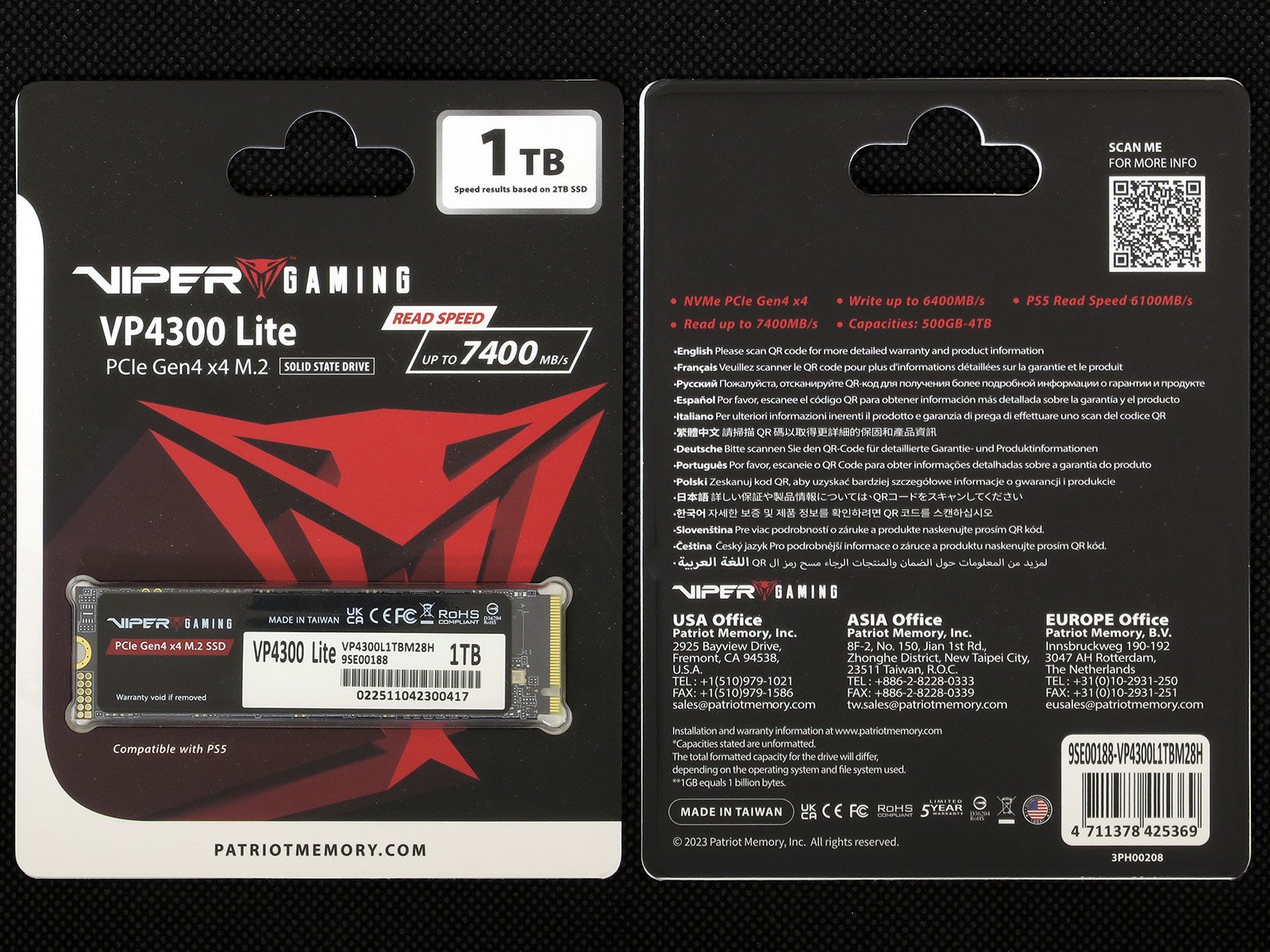
Patriot’s carded blister packaging will bring smiles to sellers but frustration to buyers, as anyone who’s crafty enough to get the drive out of the package without breaking it might just deserve that reward. But there’s a trick: Cutting a quarter inch off the sides with a sturdy pair of scissors (such as kitchen shears) allows the layers between to be peeled apart.
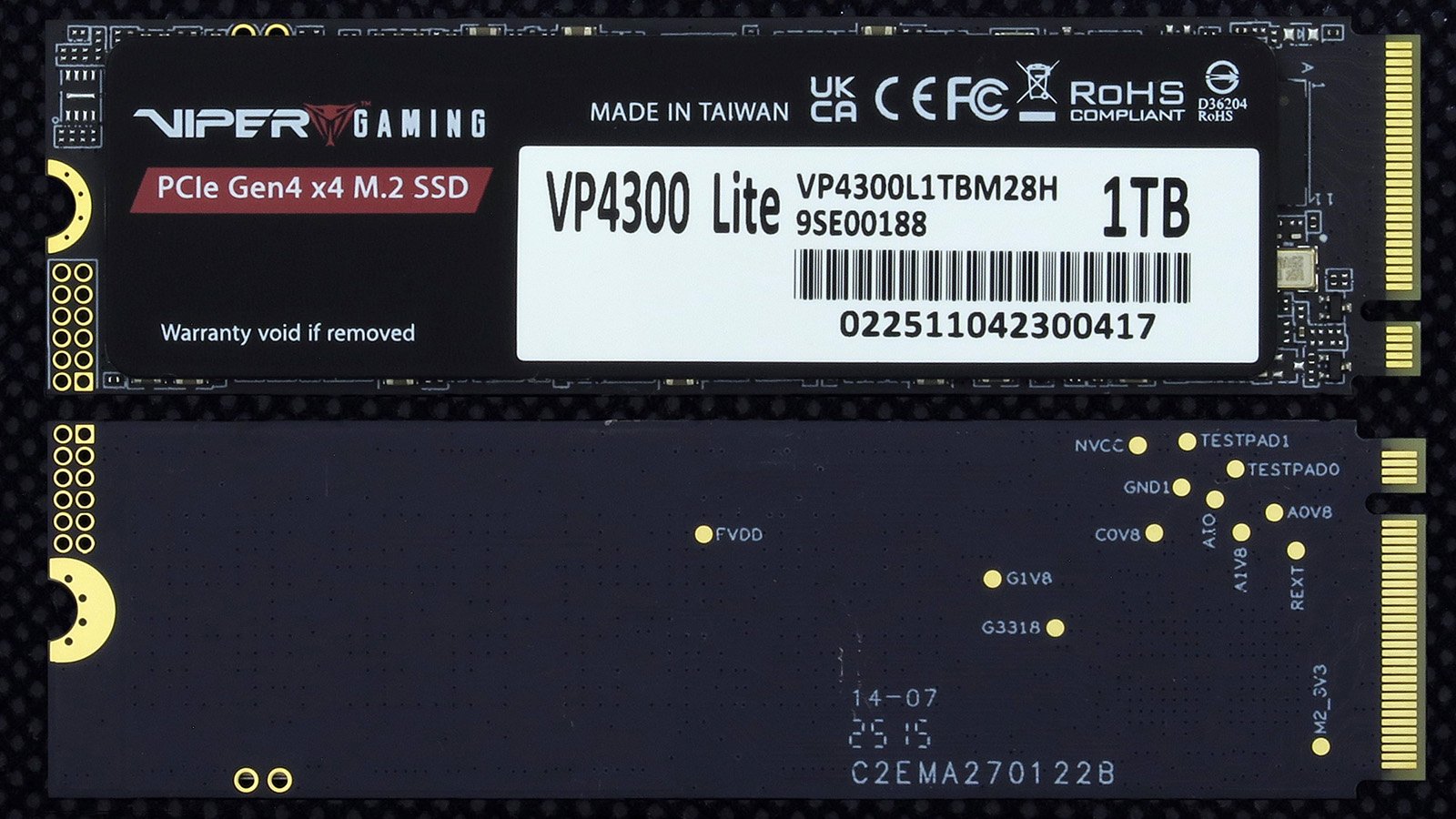
Unlike earlier versions of the drive, this 2026 model puts all of the information formerly found on the back label up front. The revised front label is also printed on a thicker sheet of actual heat spreader aluminum (around 0.4mm thick) rather than flexible foil found on every other non-heatsink drive we’ve previously tested.
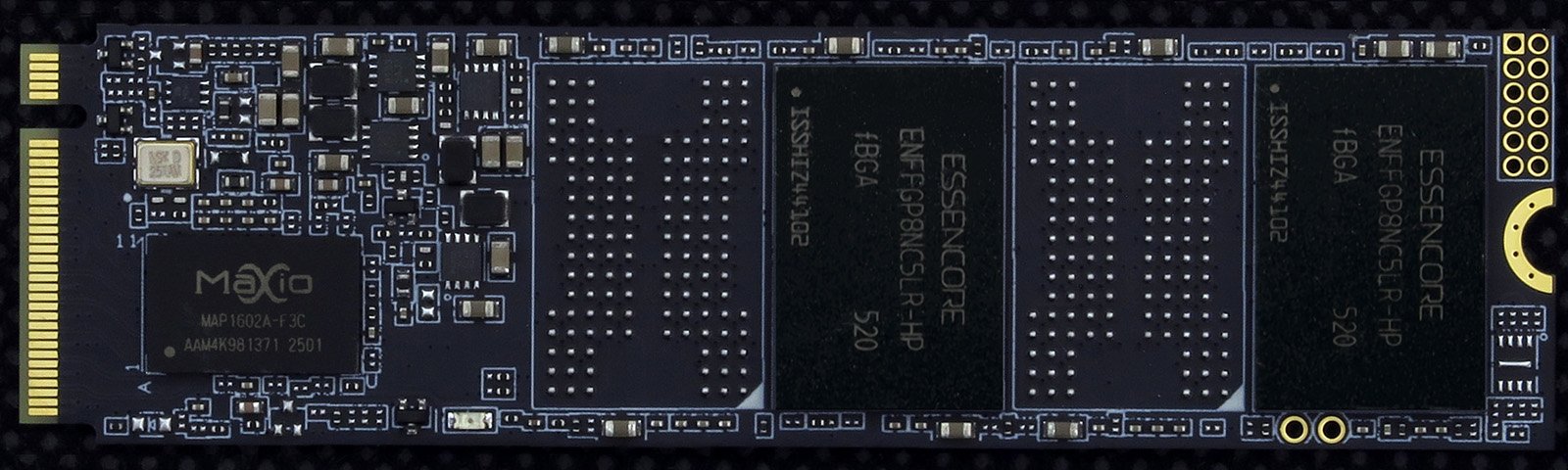
Under that thick heat spreader are Maxio’s MAP1602A-F3C four-channel controller and two Essencore ENFFGP8NC5LR-HP multi-die packages. Each Essencore package is said to contain four 232-layer YMTC chips with 2400B/s per channel, with the matching ICs of the two packages interleaved to serve its four-channel controller.
Most impressive of its features is that the VP4200 Lite carries a 5-year, 4000TBW limited warranty.
We’ve updated our classic test platform to AMD’s Ryzen 9 for the most recent two generations of drive analysis:
| Test System Configuration | |
| CPU | AMD Ryzen 9 7950X: 16C/32T 4.5-5.7 GHz, 64MB L3 Cache, Socket AM5 |
| CPU Cooler | Alphacool Core 1 Aurora, VPP655 with Eisbecher D5 150mm, NexXxoS UT60 X-Flow |
| Motherboard | ASRock X870E Taichi, Socket AM5, BIOS 3.16 (12-20-2024) |
| Graphics | Powercolor Red Devil Radeon 6750 XT: 2324-2623MHz GPU, 12GB GDDR6 |
| Memory | Crucial Pro OC Gaming Edition DDR5-6400 2x16GB (32GB) CL32-38-38-96 1.30V |
It’s been a while since we’ve tested a 1TB drive and some of those older parts are no longer available, but among those that are is the five-year-old MSI Spatium M470 and the legendary Legend 960 that, with the help of its DDR4 local cache, ate its lunch (figuratively). Crucial’s newer P310 steps in to show us how modern budget drives challenge their upmarket elders, but the prices of those elders have all fallen in price to match it.
VP4300 Lite Performance
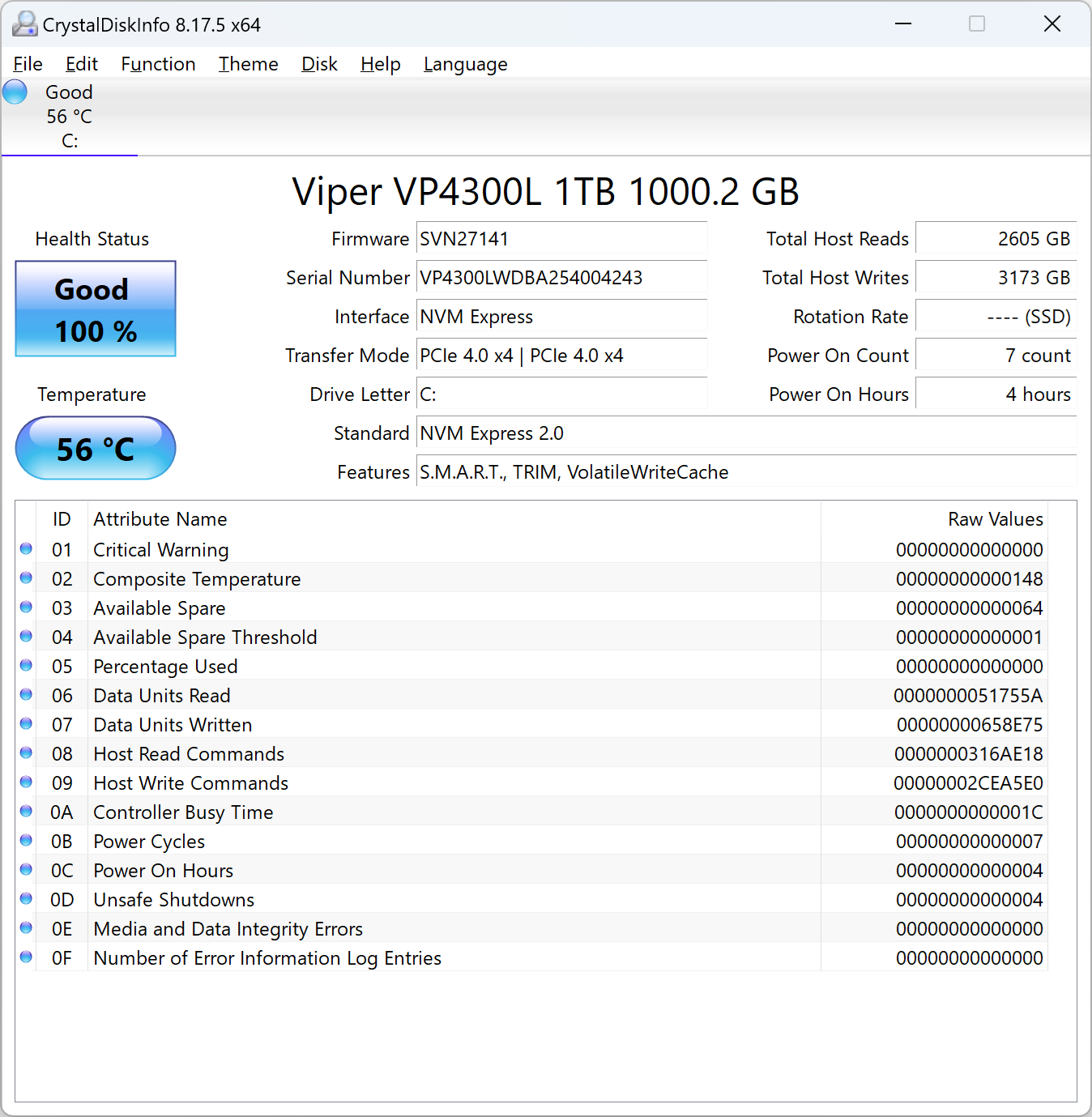
The VP4300 Lite’s temperature climbed to only 56° in a balmy 23° office while under full load (we use our motherboard’s M.2 sink when testing bare drives and the drive’s sink when testing that type).
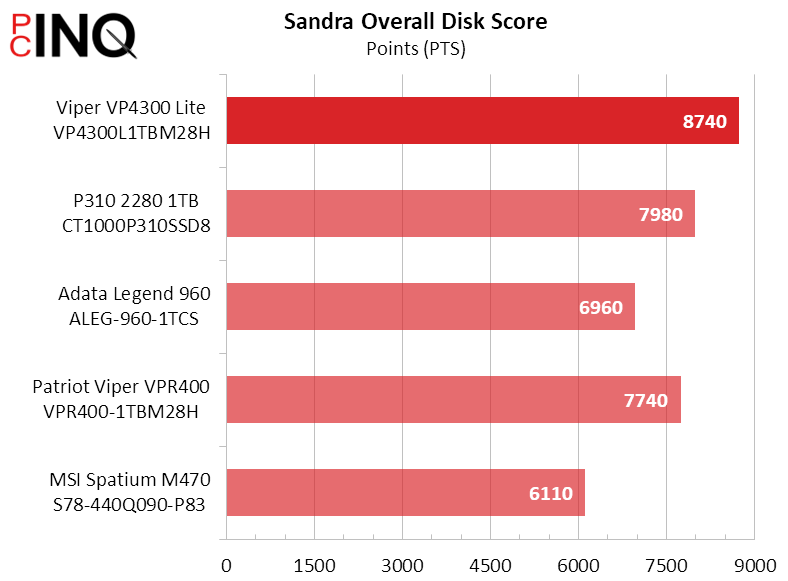
The the current VP4300 Lite carries Sandra’s overall disk score, but a look at individual tests shows leadership inconsistency.
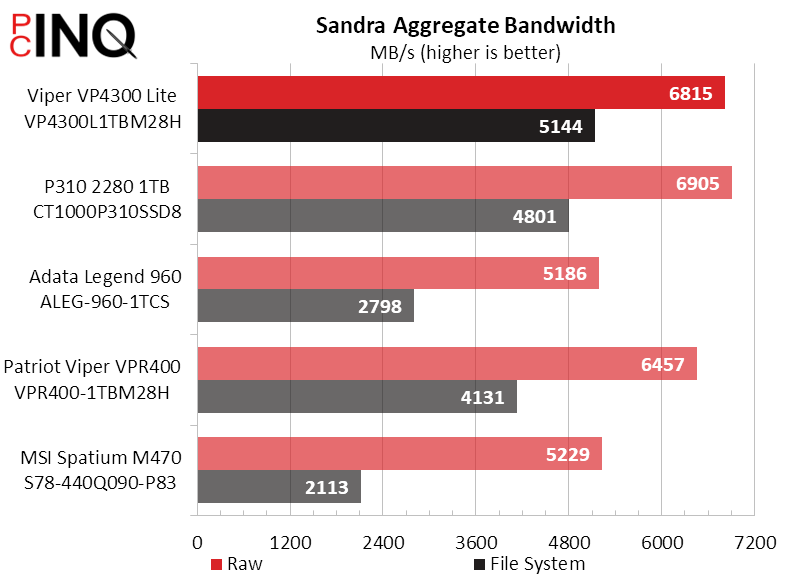
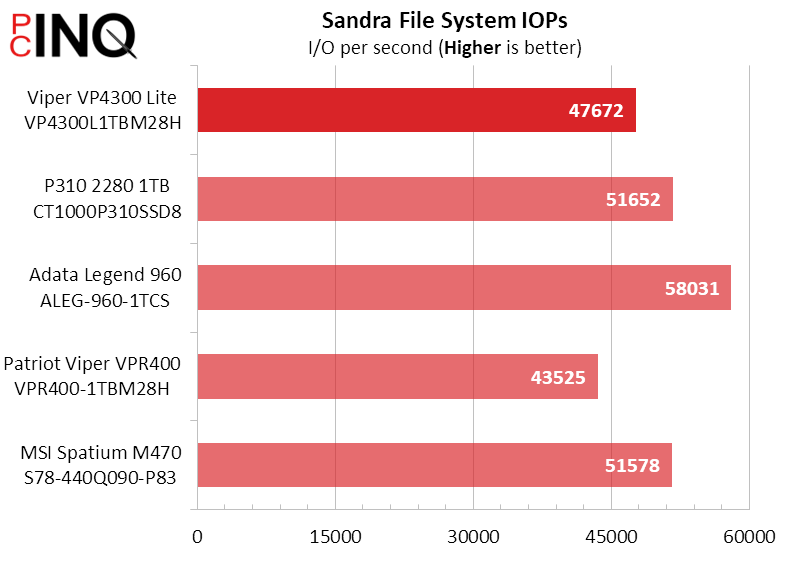
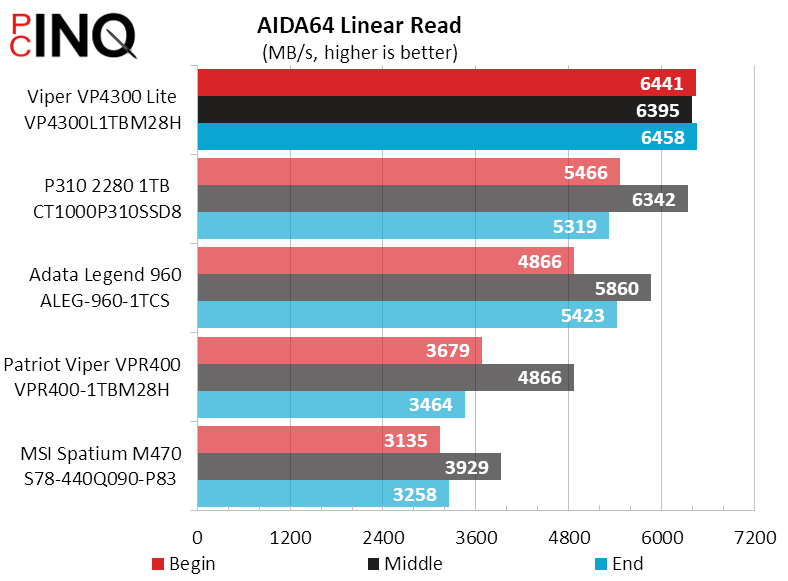
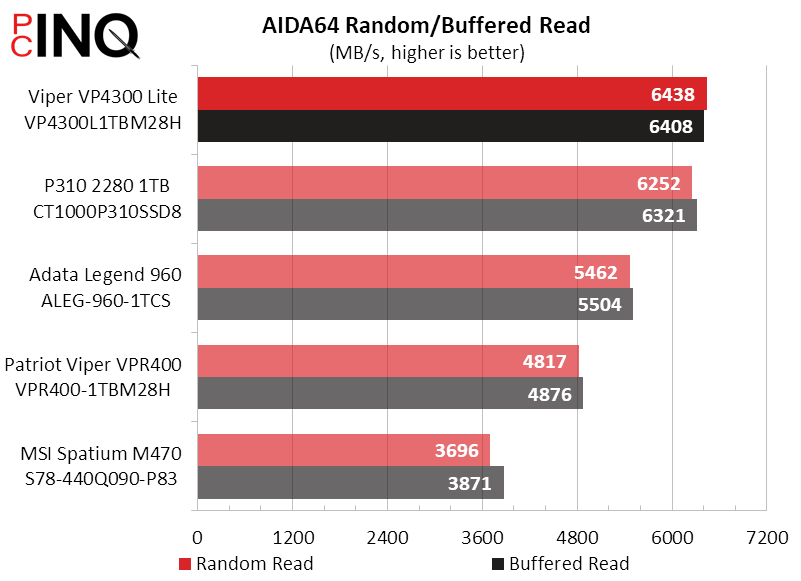
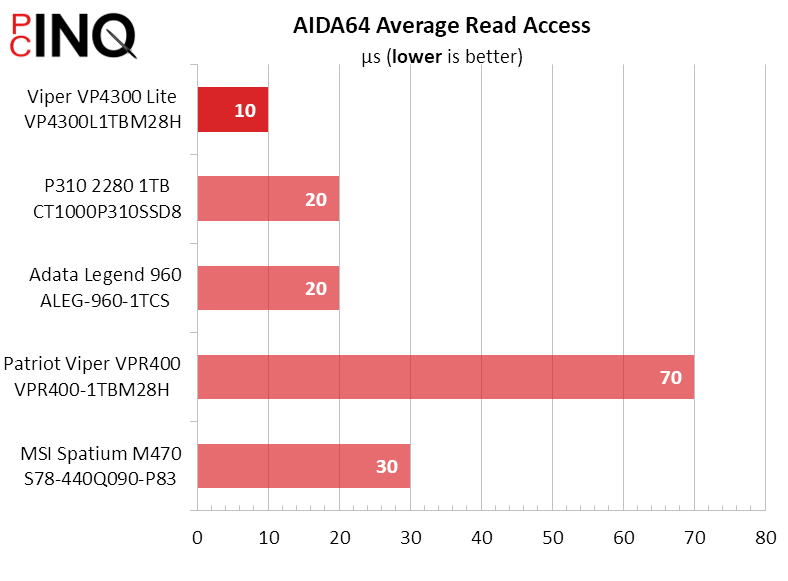
AIDA64 gets a truer read on the VP4300 Lite’s real-world performance, exposing its exceptional read access latency. Rather than relying on a mere trick of HBM or the write-centric boundaries of pseudo-SLC space, the drive wins on pure silicon muscle: it pairs an ultra-streamlined 4-channel controller pipeline with modern, high-speed 2,400 MT/s NAND cells to strip out traditional hardware latency floors entirely.
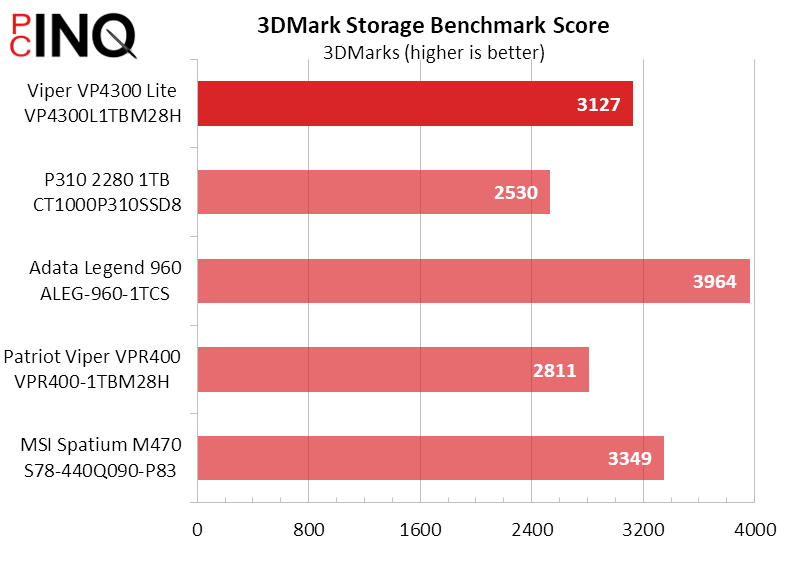
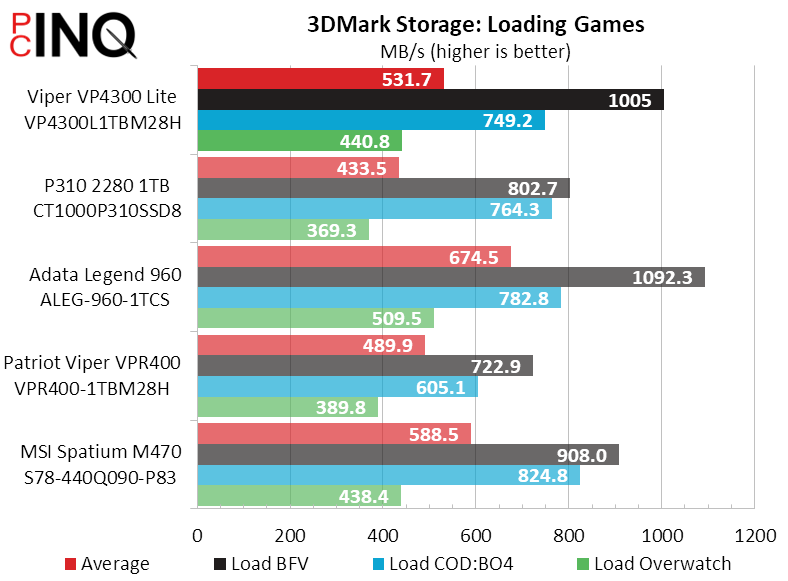
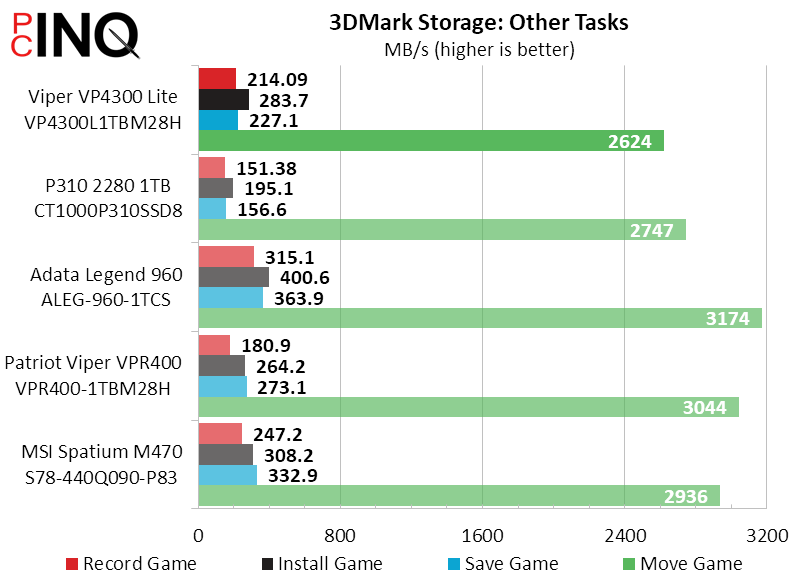
3DMark’s Storage benchmark puts the VP4300 Lite immediately between the two older drives that have DRAM cache and the two that don’t. It might be the best-performing cache-free drive, for what that’s worth.
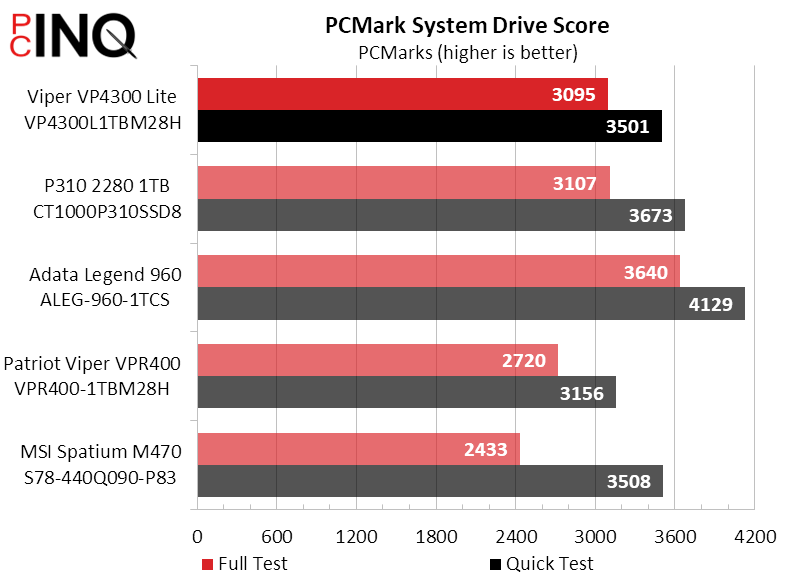
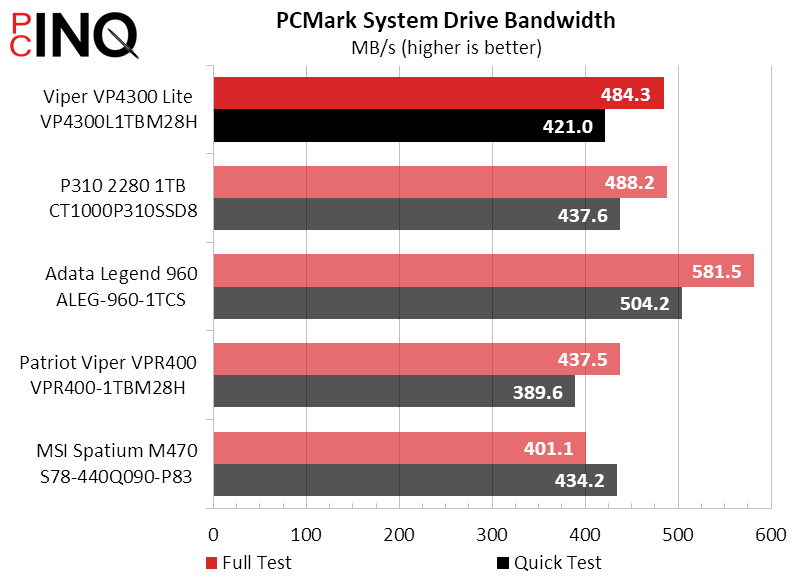
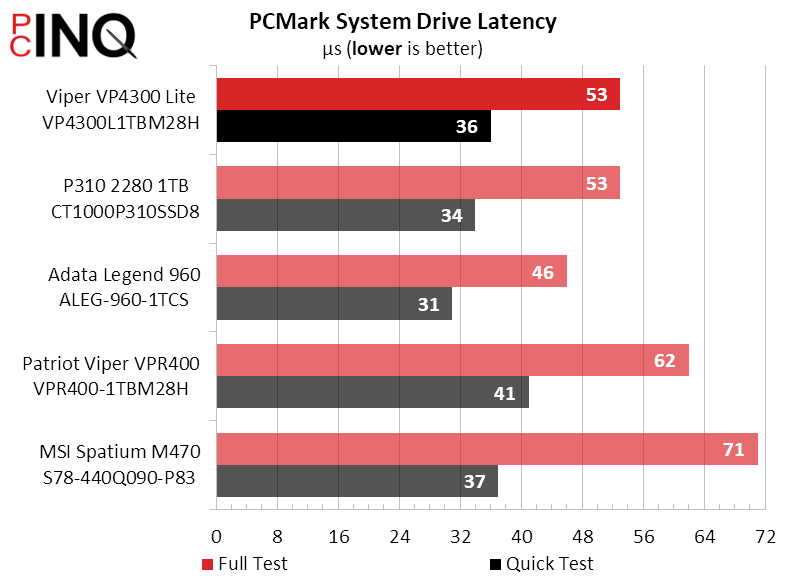
By shuffling reads and writes to mimic real-world applications in a way that AIDA64 never could, PCMark reveals the limits of DRAM-less cache and hands a firm win to the Legend 960’s gigabyte of DDR4-2400 cache.
The Adata Legend 960’s DRAM cache unleashes a massive 185.5K write IOPS at low queue depth while the VP3200 Lite is overwhelmed: The bus becomes the limiting factor at high queue depths, where the VP4300 Lite steps back into the fight.
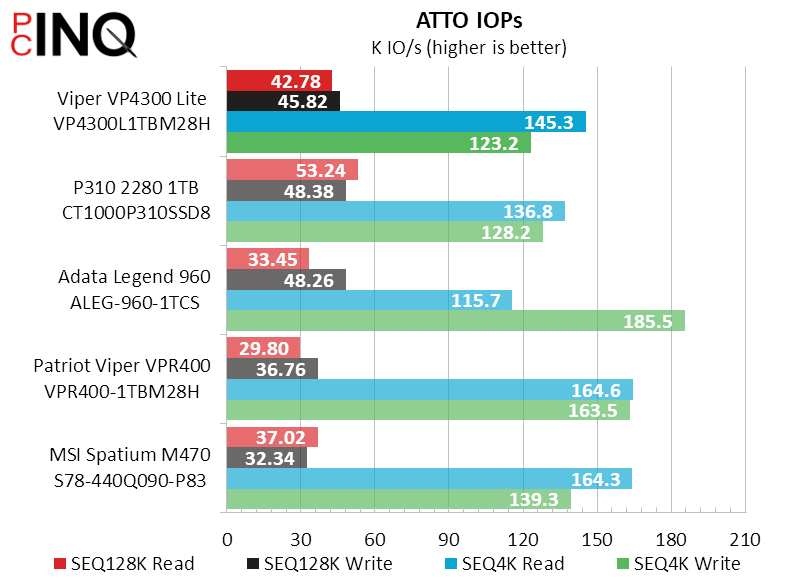
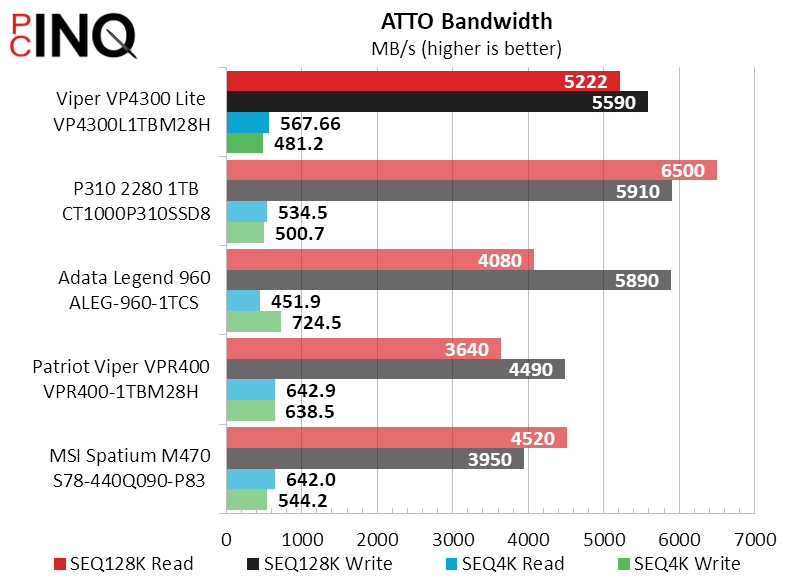
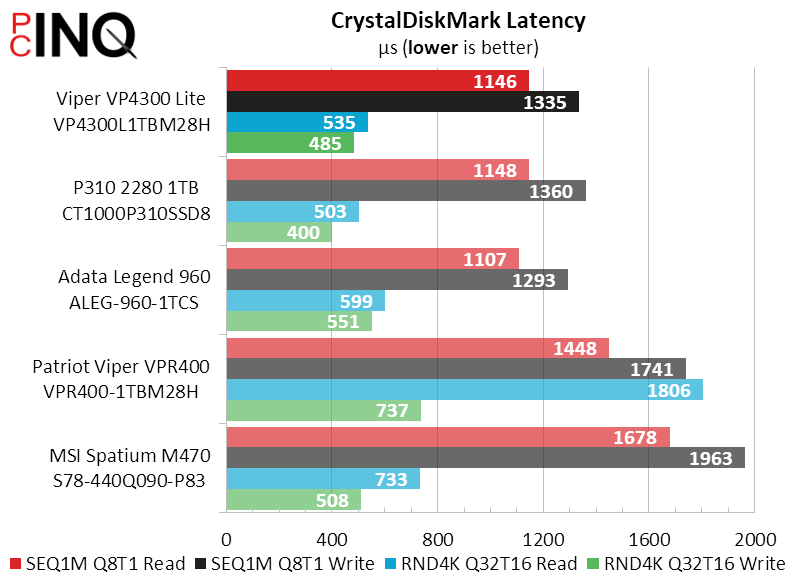
If ATTO exposes the real-world transit bottleneck of DRAM-less tracking, CrystalDiskMark exposes the ultimate benchmarking loophole: By confining rapid random testing to a tiny 1GB zone, the entire FTL map fits within local controller cache rather than demanding additional DRAM or HMB transit. Without the limits of cache outside the controller, the test becomes one of pure controller-to-NAND throughput.
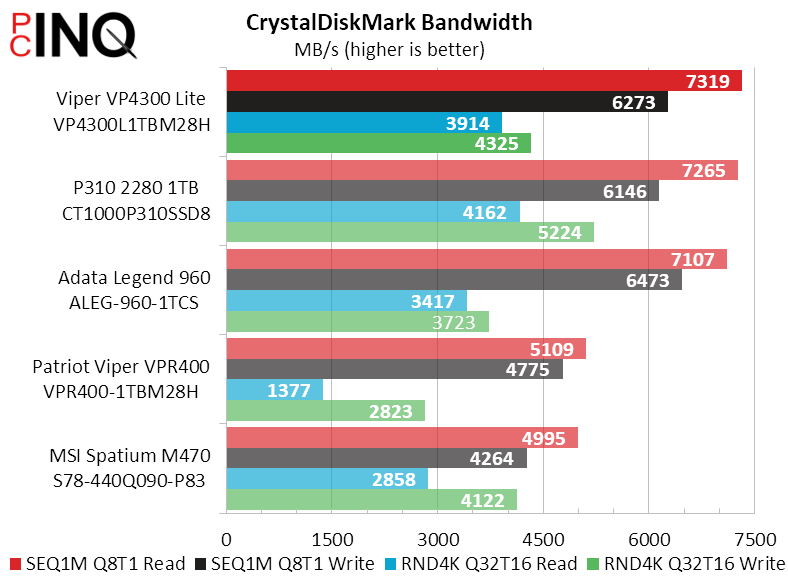
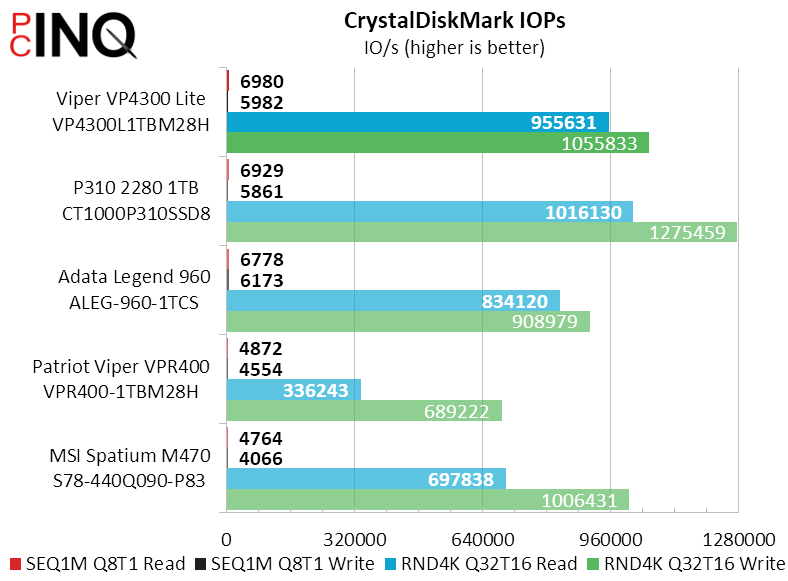
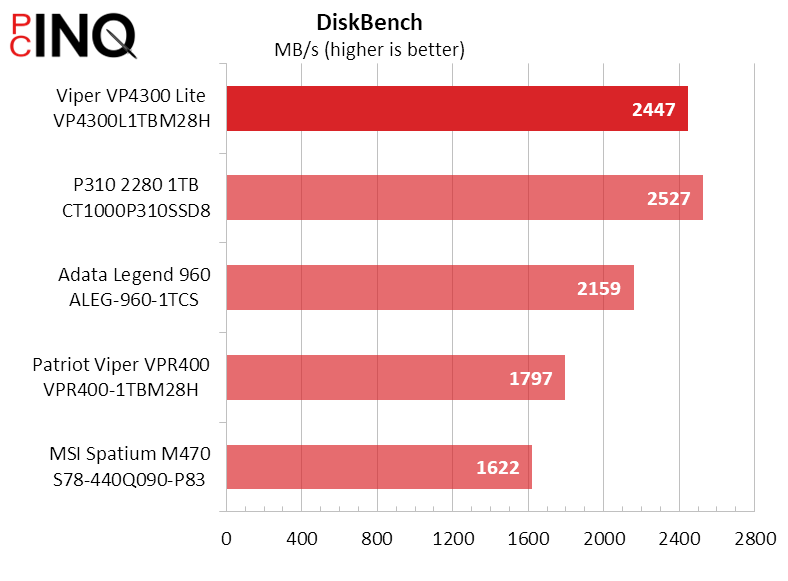
Apply everything we just said to one huge file rather than 512 instructions and you get the DiskBench results. With the command overhead completely cleared away, the main bus is left wide open to push massive blocks of pure data payload—allowing the modern 2,400 MT/s cell arrays inside the DRAM-less Viper and P310 to stretch their legs and cleanly outrun yesteryear’s flagships.
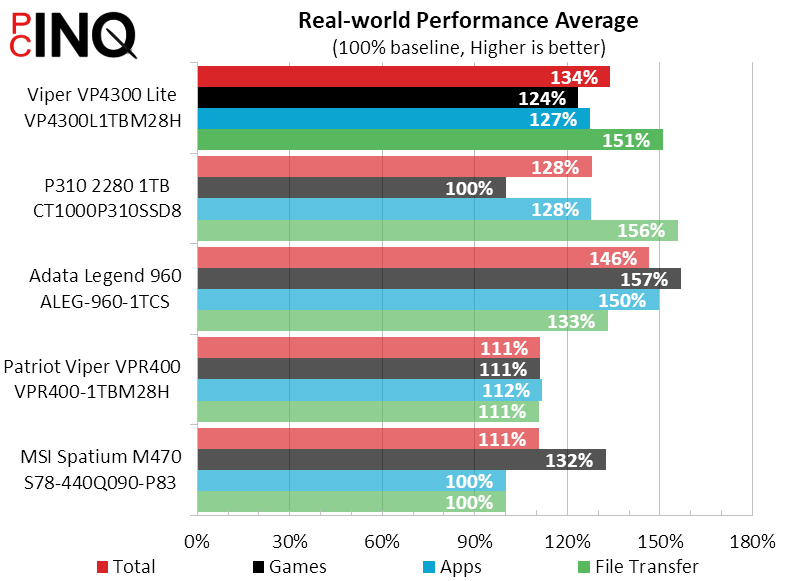
Because so many real-world applications have complex cache indexing needs, the final performance average still gives a slight total win to the Adata Legend 960: Onboard DRAM remains the superior engine for heavy application multitasking, while the modern, DRAM-less Viper VP4300 Lite establishes itself as an ultra-efficient file-transfer powerhouse when unburdened by those needs.
Value Verdict
While two-years of shortage in NAND and DRAM supply has justified complaints against manufacturers and the data centers they seem to prefer, the Legend 960’s mature technology has positioned it perfectly to overtake its competitors: Even the Spatium M470 has doubled in price over the past few years the Legend 960 has increased by only around 60%. That 40% different puts its price neck and neck with the VP4300 Lite, making the
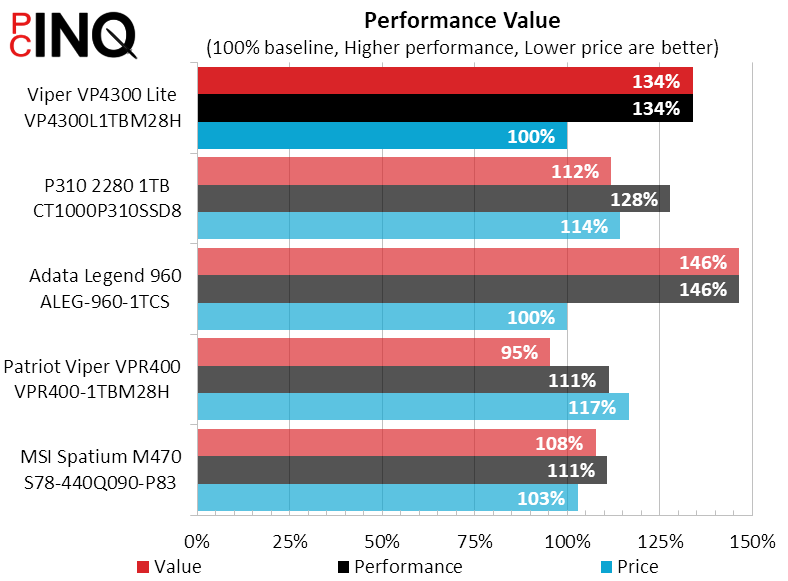
But what about the subject of today’s review, the VP4300 Lite? Finishing with a strong second place to a drive that’s already getting harder to find, the VP4300 Lite becomes the surviving choice for that near day when the Legend 960 finally disappears.

| Viper VP4300 Lite (VP4300L1TBM28H) | |
| Pros | Cons |
| Ultra-low latency Max Gen4 Throughput Generational Consistency | DRAMless-cache bottlenecks No pricing advantage |
| The Verdict | |
| The Viper VP4300 Lite would lead our Gen4 1TB series had the legacy Legend 960 merely gone away, but the persistence of the preceding premium part pushes its proxy position. | |


