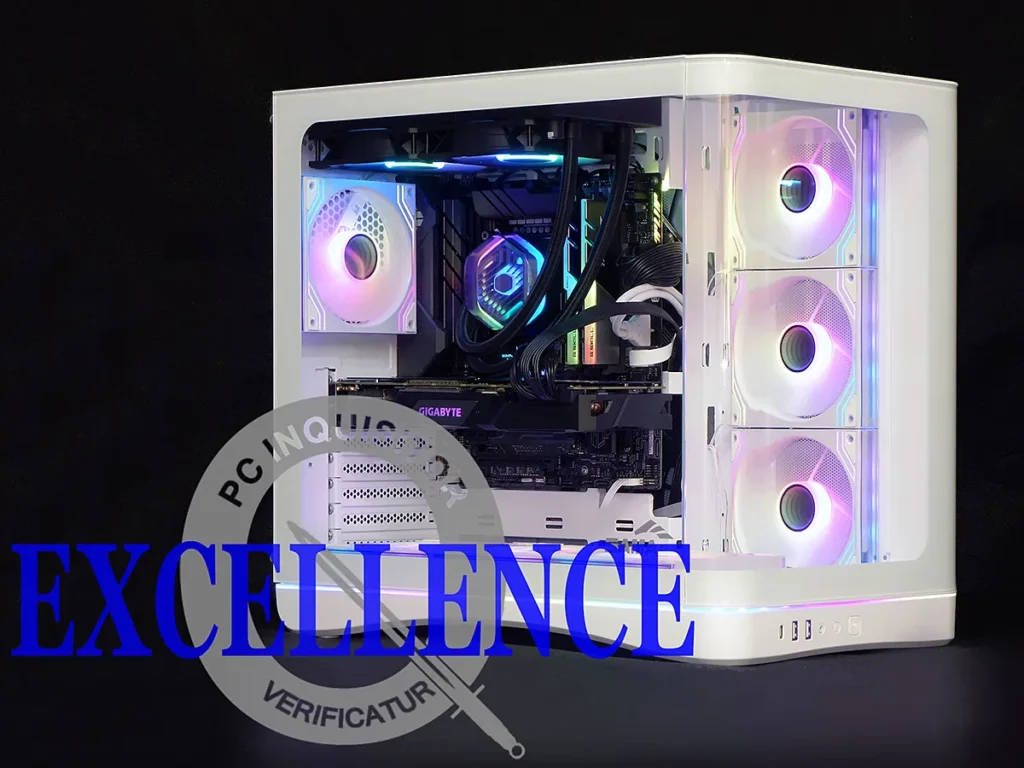
Sama V62 White ATX Case Review
Curved glass was supposed to be a big deal when case designers added it, but most of the panels we’ve seen had only one curve. Being a case supplier, Sama stepped things up by curving both sides of the new V62’s face. It also charges a bit extra for the feature, so we immediately jumped into the specs to see if there were any other features that could help to justify its higher-than-average price.
| Sama V62 White (V62-WHADA7X1-GL) | |||
| Type | Mid Tower | Included Fans | (3) 120mm Side, (3) 120mm Bottom, (1) 120mm Rear |
| Motherboard Support | ATX, Micro ATX, Mini ITX | Front Fan Mounts | X |
| Dimensions (HxWxD) | 16.62″ x 11.25″ x 18.75″ (42.2 x 28.6 x 47.6 cm) | Rear Fan Mounts | (1) 120mm |
| Weight | 18.1lbs (8.21kg) | Top Fan Mounts | (3) 120mm or (2) 140mm |
| Max Motherboard Depth | 11.5″ (29.2cm) | Bottom Fan Mounts | (3) 120mm |
| Card Length | 445mm | Side Fan Mounts | (3) 120mm |
| Power Supply Format | PS/2: Max 150/170/200mm (depends on drives) | Top Rad. Clearance | 57mm vertical, 42mm horizontal (approx.) |
| Air Cooler Clearance | 160mm | Front Rad. Clearance | X |
| External Bays | X | Front Filter | X |
| Internal Bays | (1) 3.5″, (3) 2.5″ (one shared) | Top Filter | Perforated Sheet (mag. strips) |
| Card Slots | 7 | Bottom Filter | Nylon mesh (mag. strips) |
| Ports/Jacks | (1) Gen2 Type-C, (2) Gen1 Type A, Headset Combo | Damping | None |
| Other | Integrated ARGB strip, ARGB controller/fan hub | Price | $135 |
Find it at Amazon
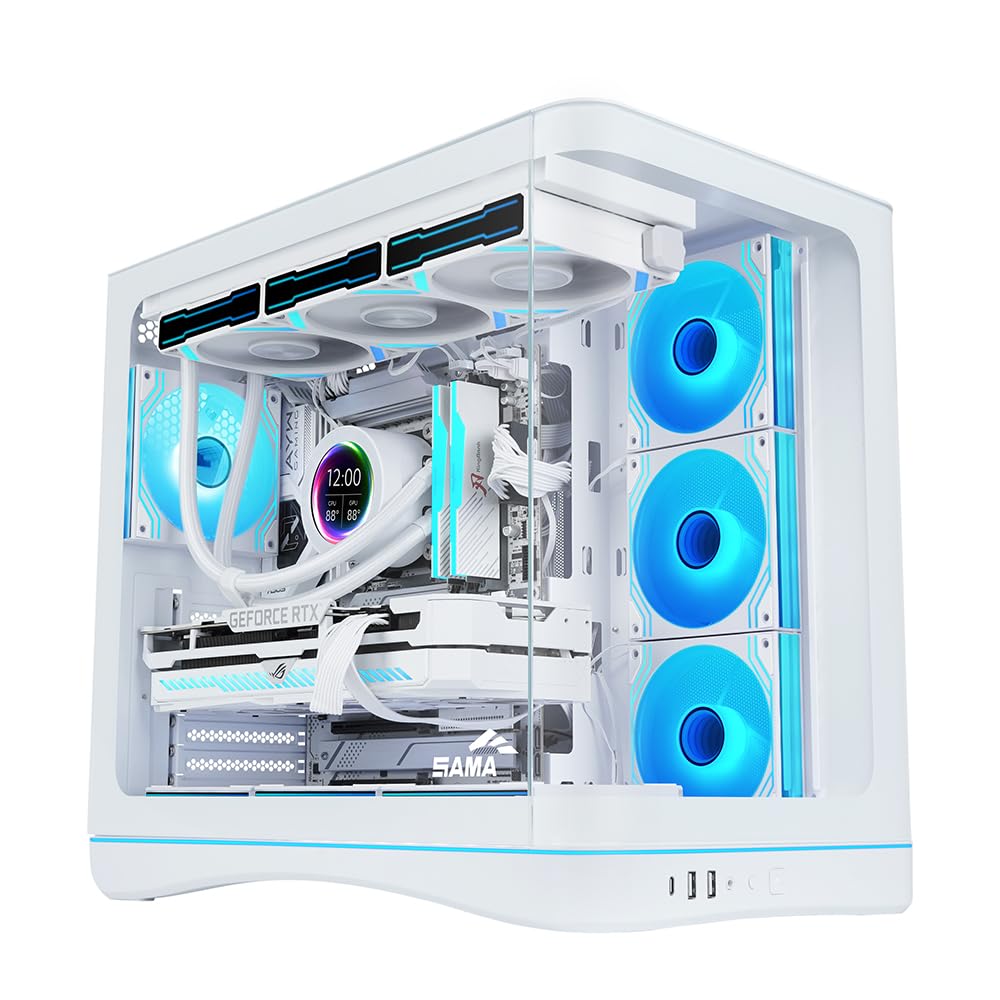
(click for availability)
Dual-chamber cases usually cost a bit more than traditional towers, though nobody seemed to let Raijintek in on that tidbit. Since the later is the most appropriate competitor dimensionally, we can quickly point out that the V62’s thicker materials (primarily the 4mm tempered glass) make it 23% more case, though a small portion of the added weight goes into the seven extra fans: Paying just $8 each for those fans would make up $56 of the $65 price difference, and we could just as easily throw the remaining $9 at the included ARGB controller which also serves as a powered fan hub. If we don’t count the cost of the fan hub, bending the glass before tempering it could also add $9 since it also increases the number of parts that break during manufacturing. Oh, and the gray stripe between the glass and the molded base? That’s a translucent light diffuser for a built-in ARGB strip…which might be worth nine dollars to some buyers.
The more we look the more clearly we see how the V62 might offer far more than its price difference in extras…
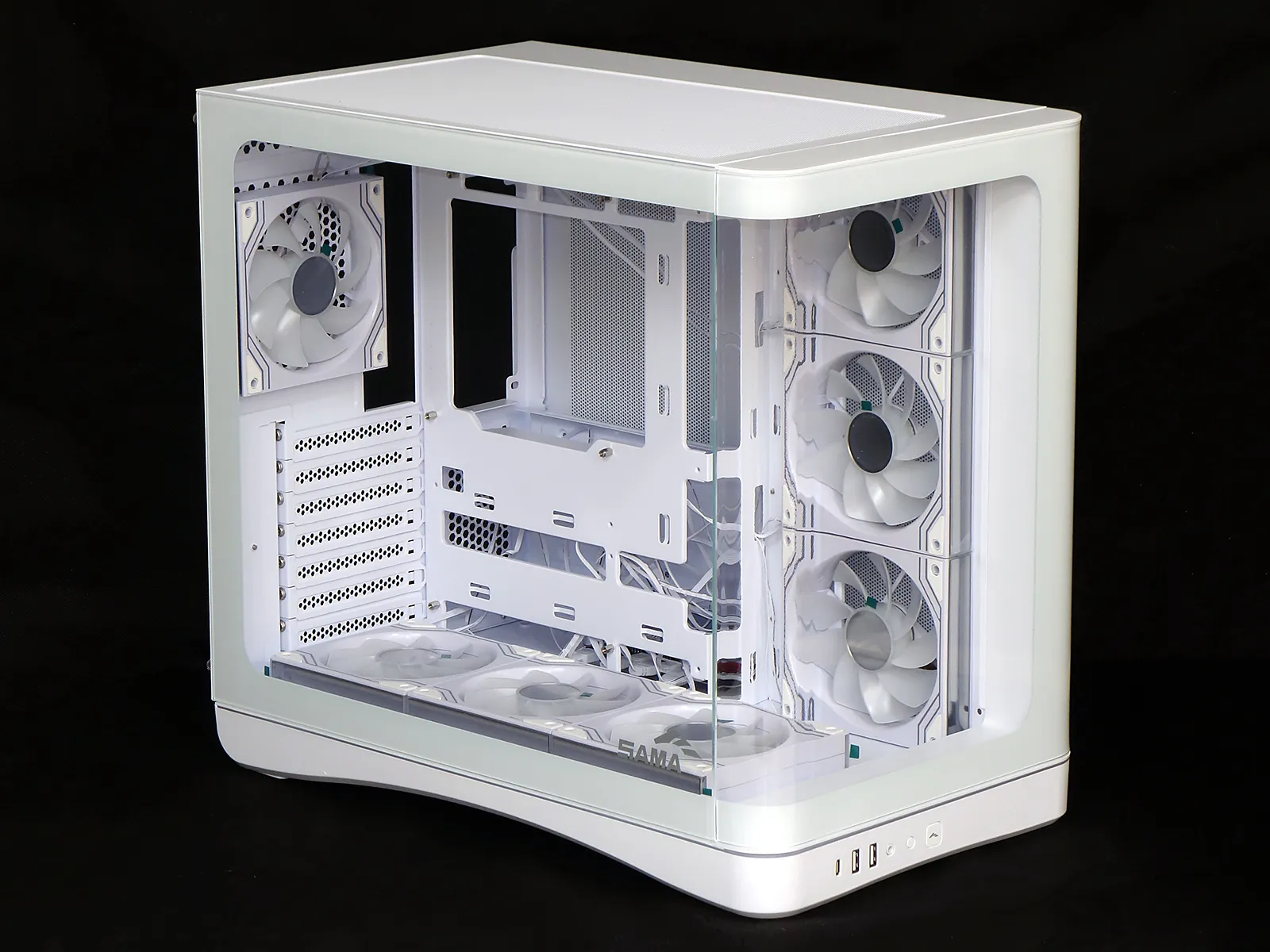
As the case doesn’t have a third button for its factory mounted ARGB controller, Sama instead connects what would have been the V62’s reset button to the ARGB board’s mode selector jumper. Comparisons to the Paean C7 become almost ludicrous at this point as that case had the extra button but lacked the controller. Regardless of that comparison, the same section of the base also shows a USB Type-C port, two Type A, a four-pole headphone/microphone combo jack, and a power button with backlit SAMA logo
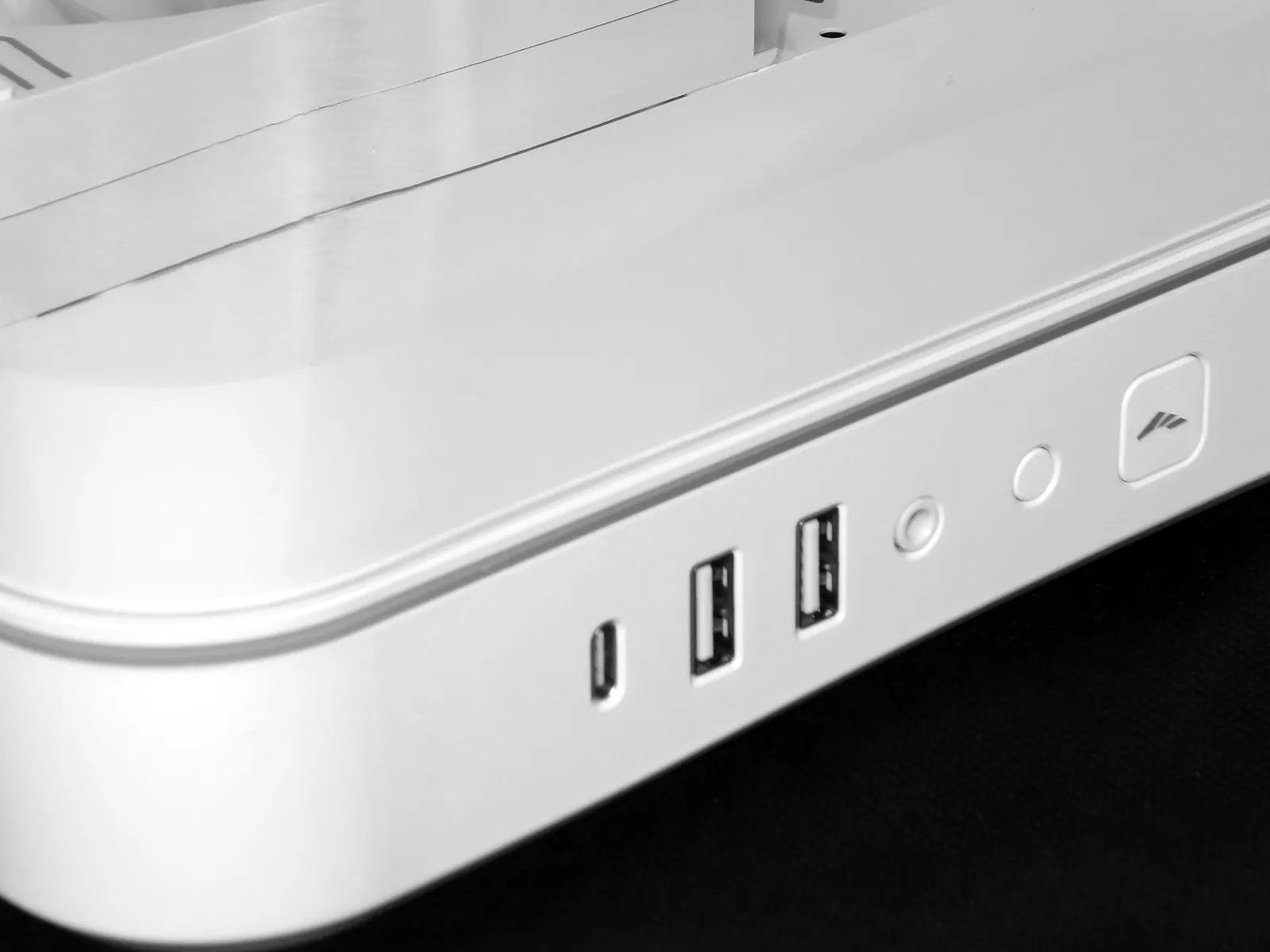
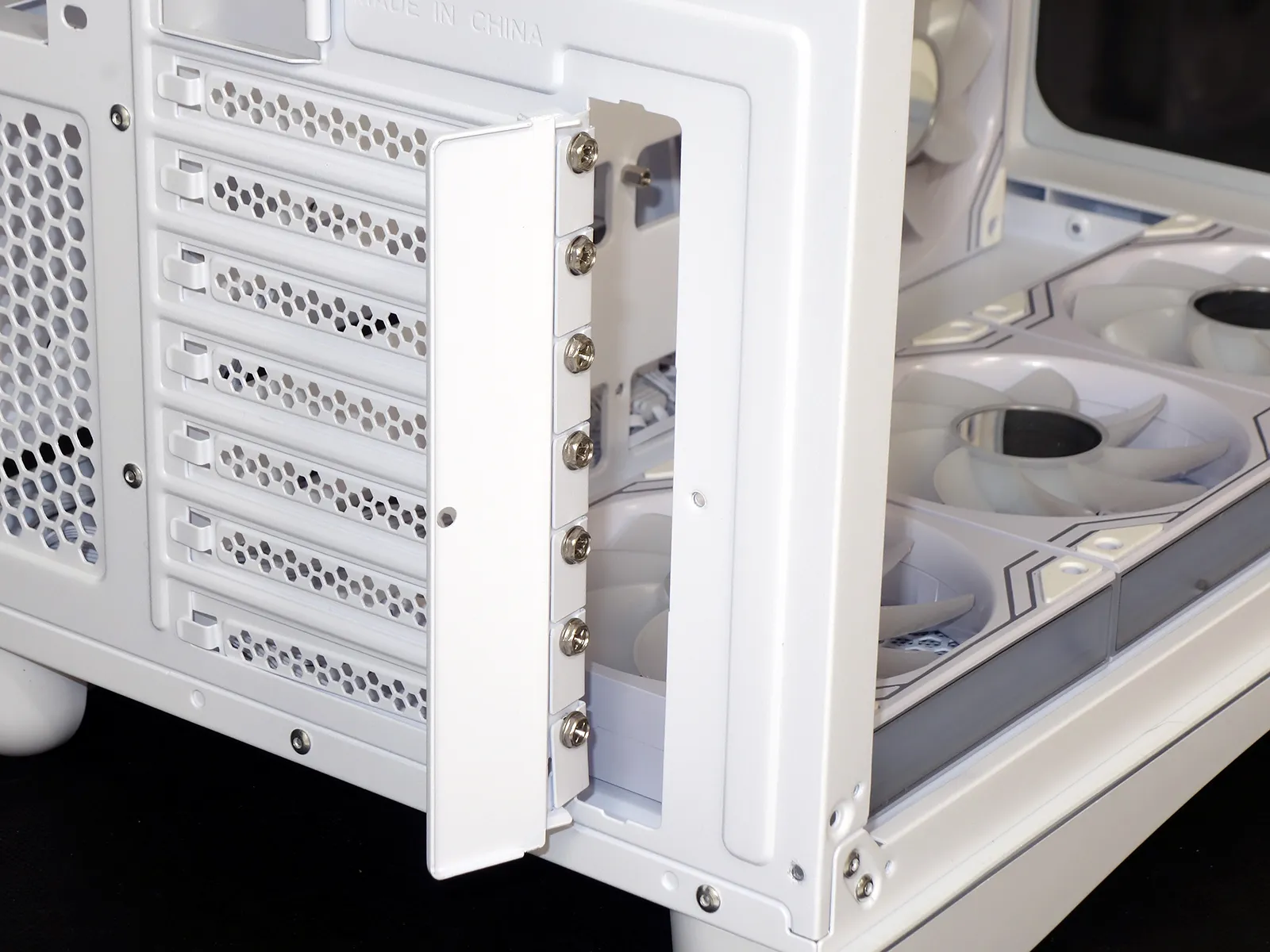
Around back are the single 120mm ARGB exhaust fan, seven expansion card slots and power supply mount. The only fan with its blades in standard orientation (it exhausts through its frame), the rear fan is mounted to slots that allow it to be slid upward by around 9mm. The expansion slots stand out among modern cases for included old-fashioned separator bars (strips of panel between each slot cover), which prevents it from working with any vertical graphics card adapters. The power supply mount also stands out for using perforations in the right side panel to feed its air, and if all three of these features sound familiar…it’s because we’ve already seen them on the C7.
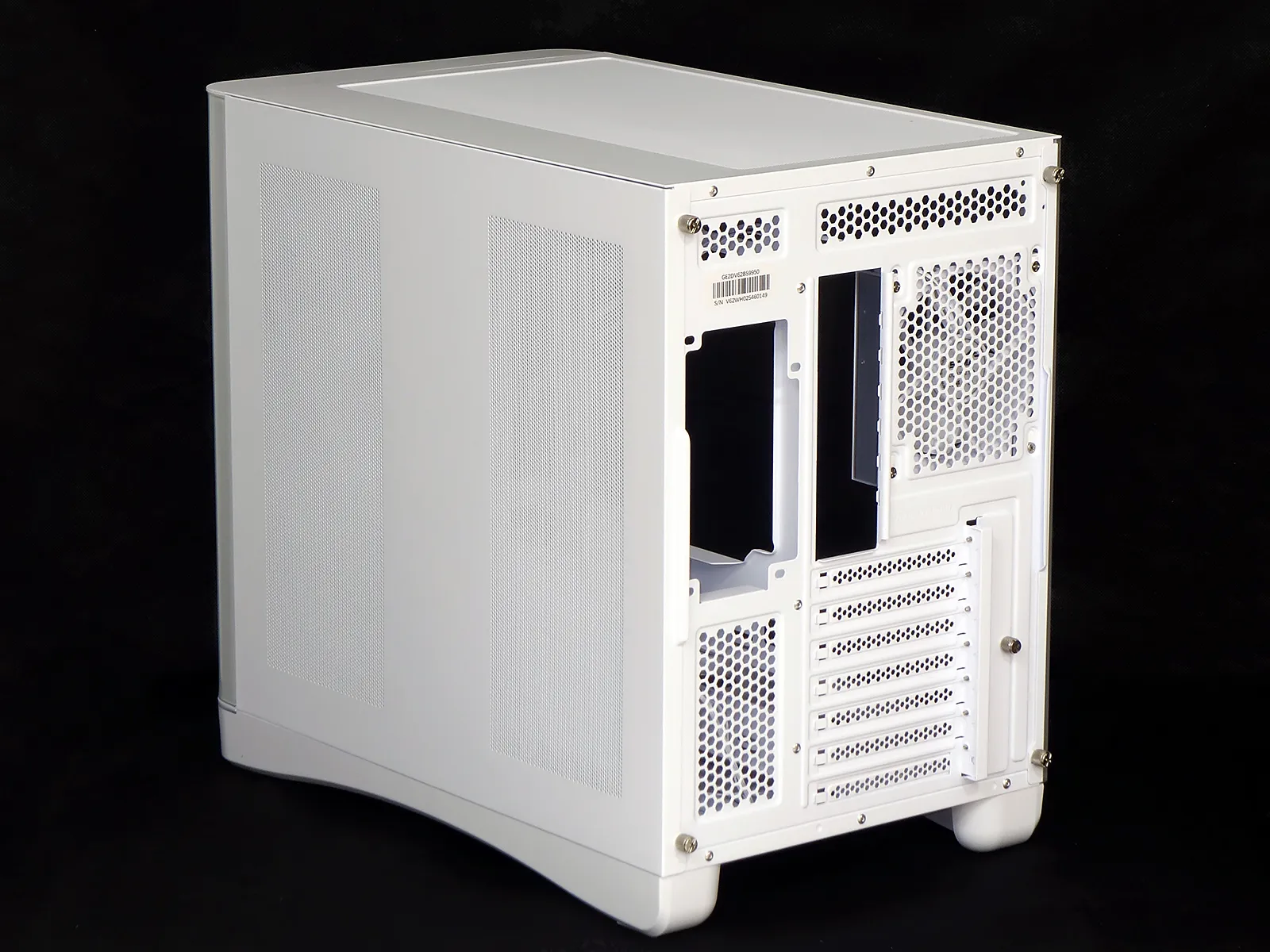
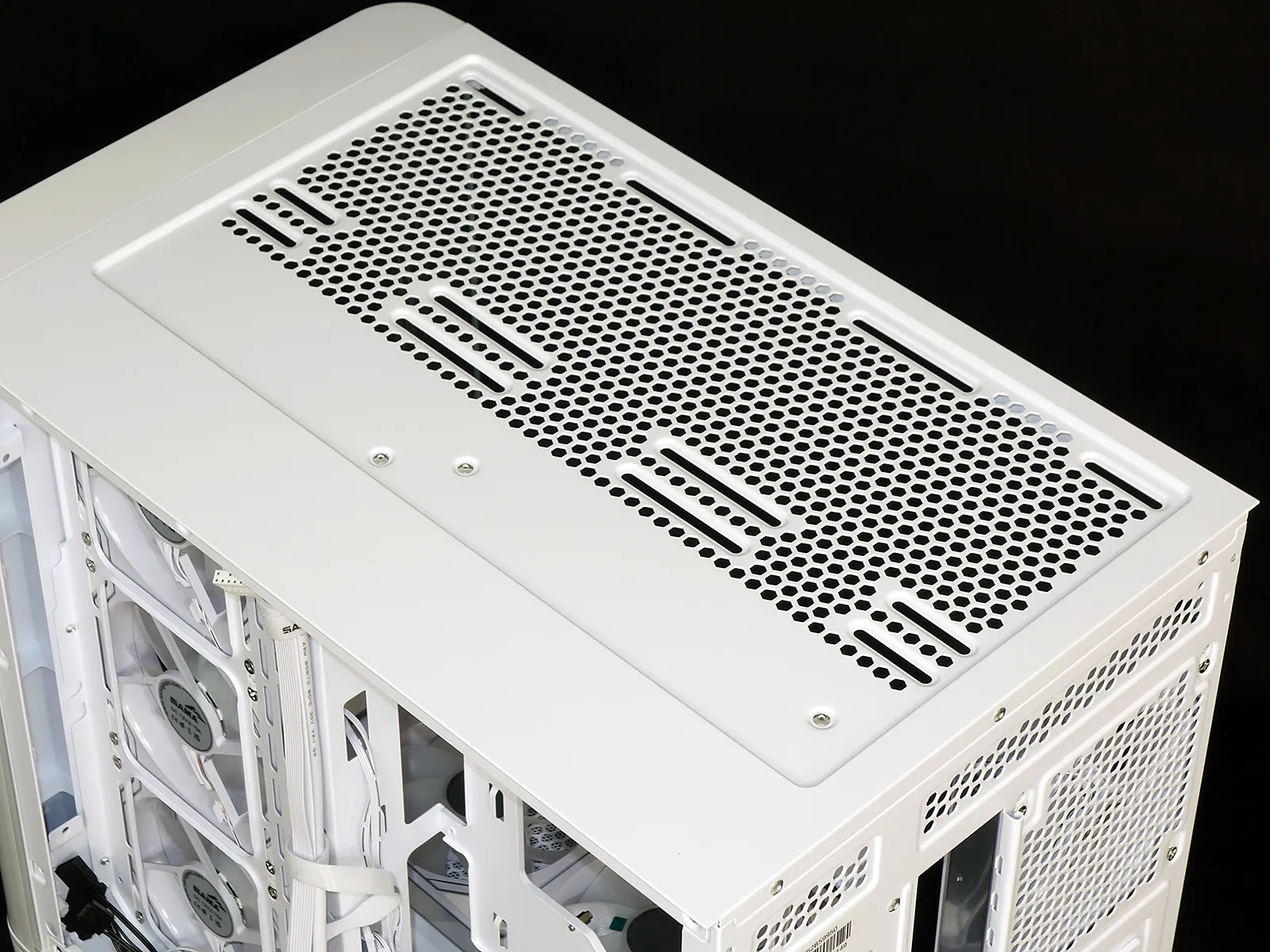
Bottom panel vents are covered in the same kind of perforated material as the top, which feels like a painted sheet of paper-thin aluminum. Regardless of what it’s actually made of, it uses flexible, adhesive-backed magnetic strips to stick to the case’s sheet steel.
You might also spot some excess mounting holes through the vent cover? Those are arranged to hold either one 3.5” or two 2.5” drives, each requiring the removal of a fan.
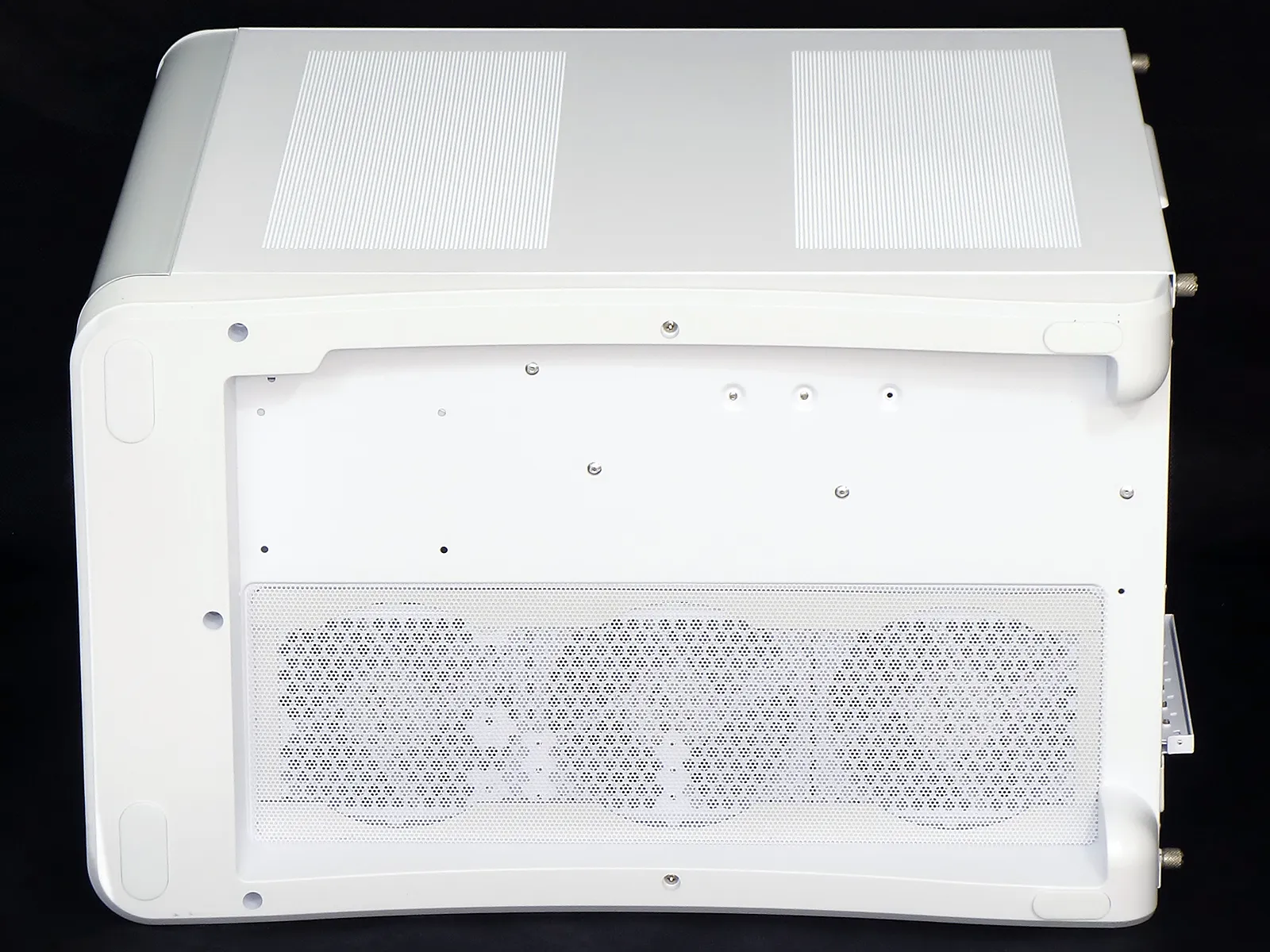
Since we knew you’d want to keep the fans, we only counted tray-mounted drive bays in our table. Using the same style tray as the C7, the V62 can support two 2.5” drives on the outside plus one 3.5” or one 2.5” tray on the inner-facing side. If you’re still not seeing similarities between cases, it might be because the V62 swaps power supply and drive tray mounting positions compared to the C7.
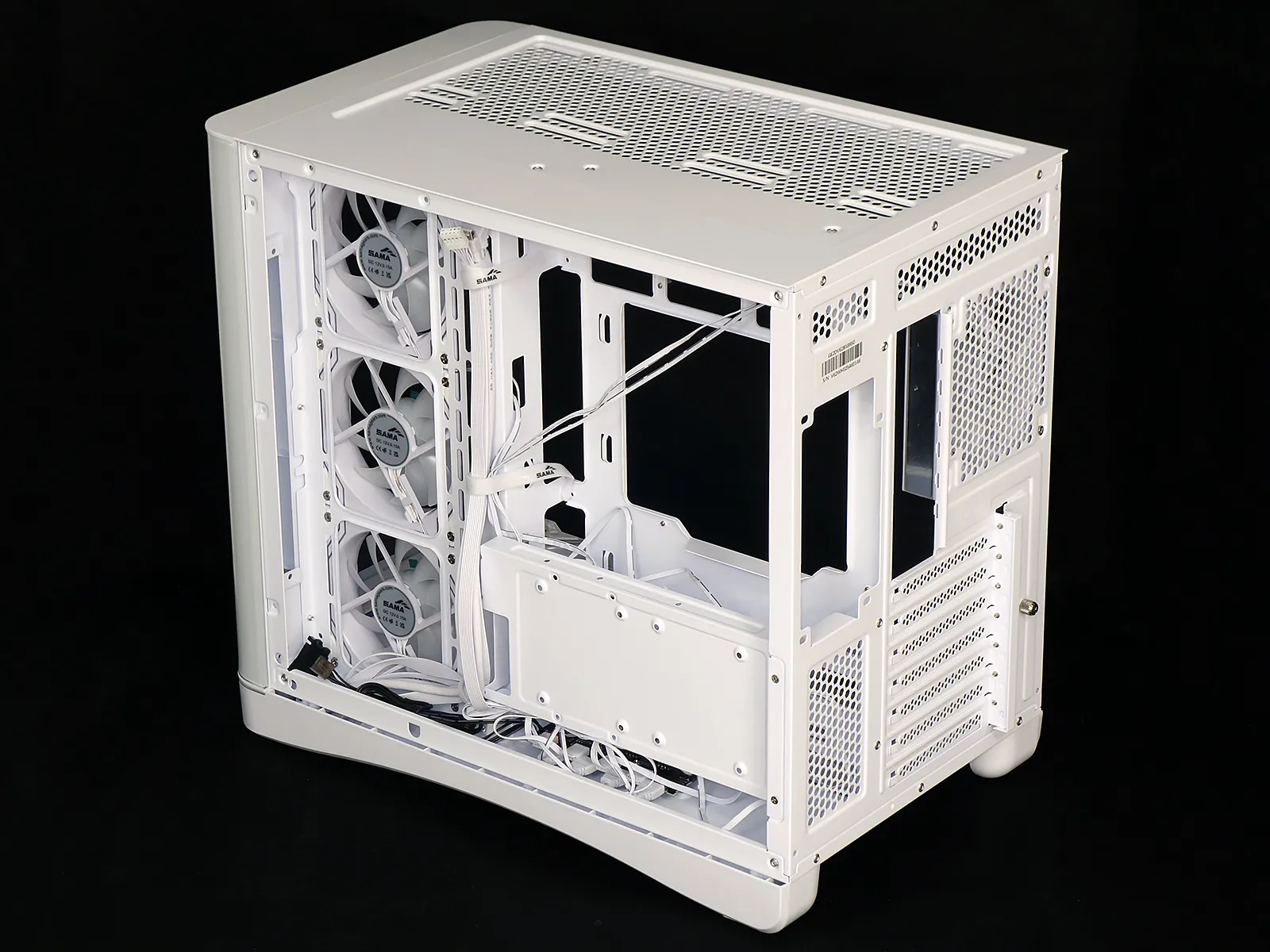
We cleaned up the ball of wires that Sama left piled over the V62’s ARGB controller so that we could get a better picture, only to notice after editing the image that we’d forgotten to plug in the case’s ARGB strip (see the connector tucked under the edge of the case at the photo’s left edge). Because each fan uses a fan power and an ARGB header, the 8-device PCB is left with two PWM and one ARGB headers after plugging in the case’s light strip.
With the ARGB controller plugged into both the front panel button and a motherboard ARGB output, we used the button on the front of the case to cycle through 18 ARGB modes before holding the button long enough to see it switch to our motherboard’s ARGB model.
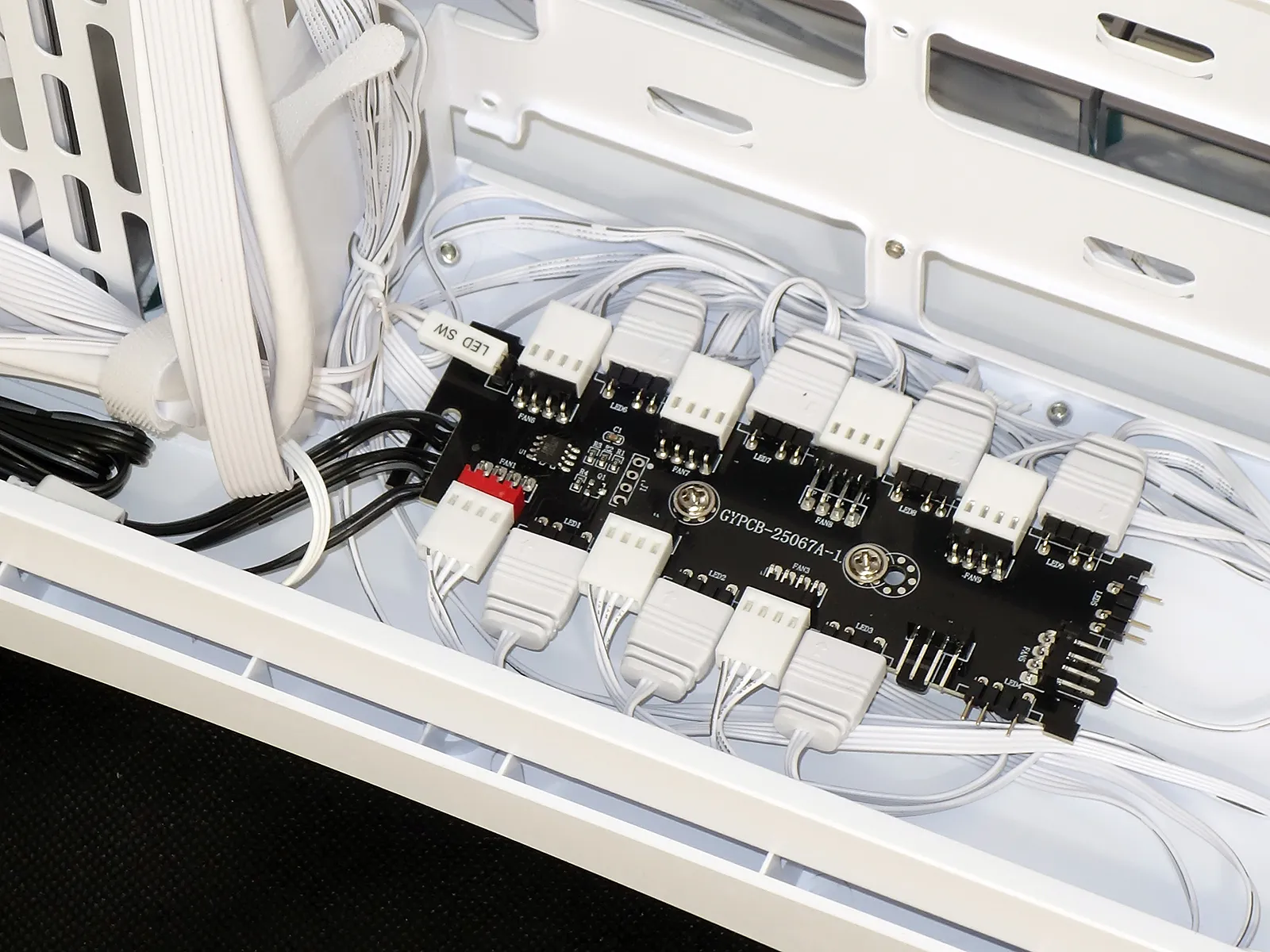
Under the flexible vented cover, the V62’s top panel gives us another case of déjà vu: Beneath it is room for a ‘360mm’ radiator that’s up to 409mm (including end caps) or, if you don’t mind mounting it closer to the top of the motherboard, a ‘280mm’ unit. Either way, the 57mm of distance between the top panel and motherboard means that most builders won’t find a clearance issue.
The V62 adds hinge points to the end of its slot gap cover, proving that one can polish the turd of design features: While the 22mm-wide gap is large enough to allow most graphics cards to slide past the rear edges of most motherboards, that wouldn’t have even been a question if the company had simply used a boxed-in (keyword in) I/O panel rather than a folded-out card holder tab. A good example of the more-traditional design can be seen in our recent V100R Mini review.
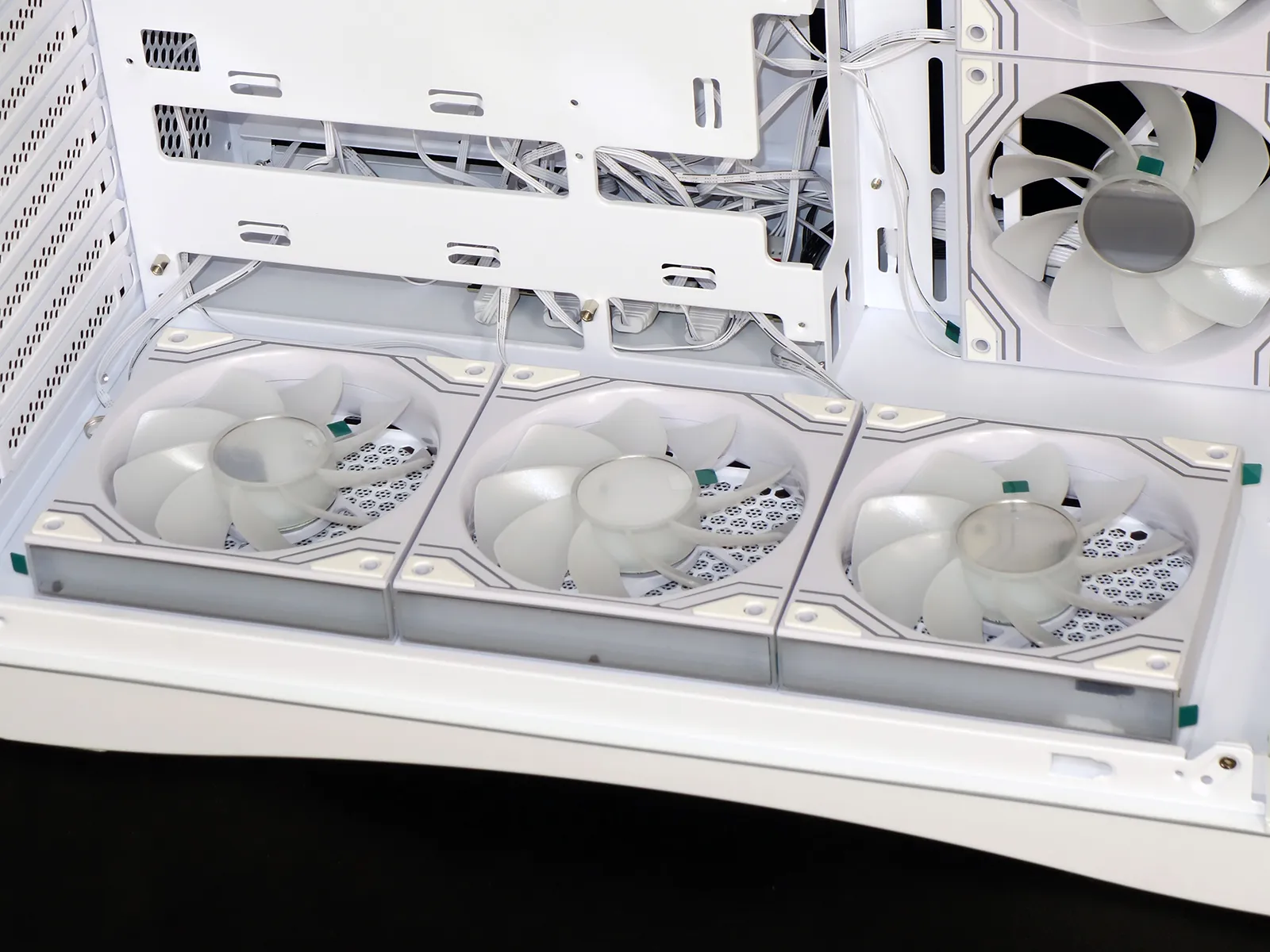
The V62’s intake fans, both bottom and side, are all ARGB and all reverse-flow, meaning that the air comes out of the face rather than the back. This allows Sama to hide the frames on the back side without sacrificing their purpose as intakes.
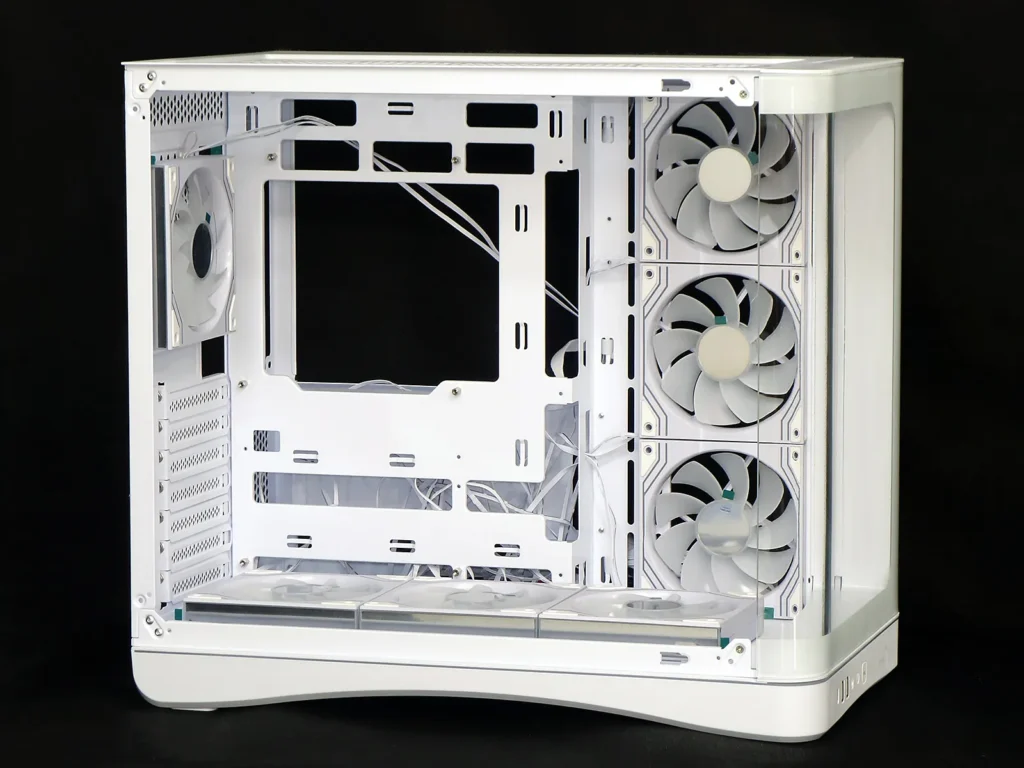
Zooming out, we see that the V62’s motherboard tray is optimized to support both ATX and Micro ATX boards with rear-facing connectors, which is a feature we haven’t tested yet. An extra set of holes at the top make room for power cables on motherboards with regular connectors, and the front holes continue around the front corner of the motherboard tray towards the side radiator mount.
The side fan mount sits around 67mm behind the motherboard mounting plain (including standoffs), but its ~365mm of height isn’t enough to fit the end caps of ‘360mm’ radiators. Those who really want to use that space can still mount a ‘280mm’ unit if they’d like, as the sheet metal behind the factory 120mm fans is also designed to hold a pair of the 140mm alternative.
Building With The V62 White
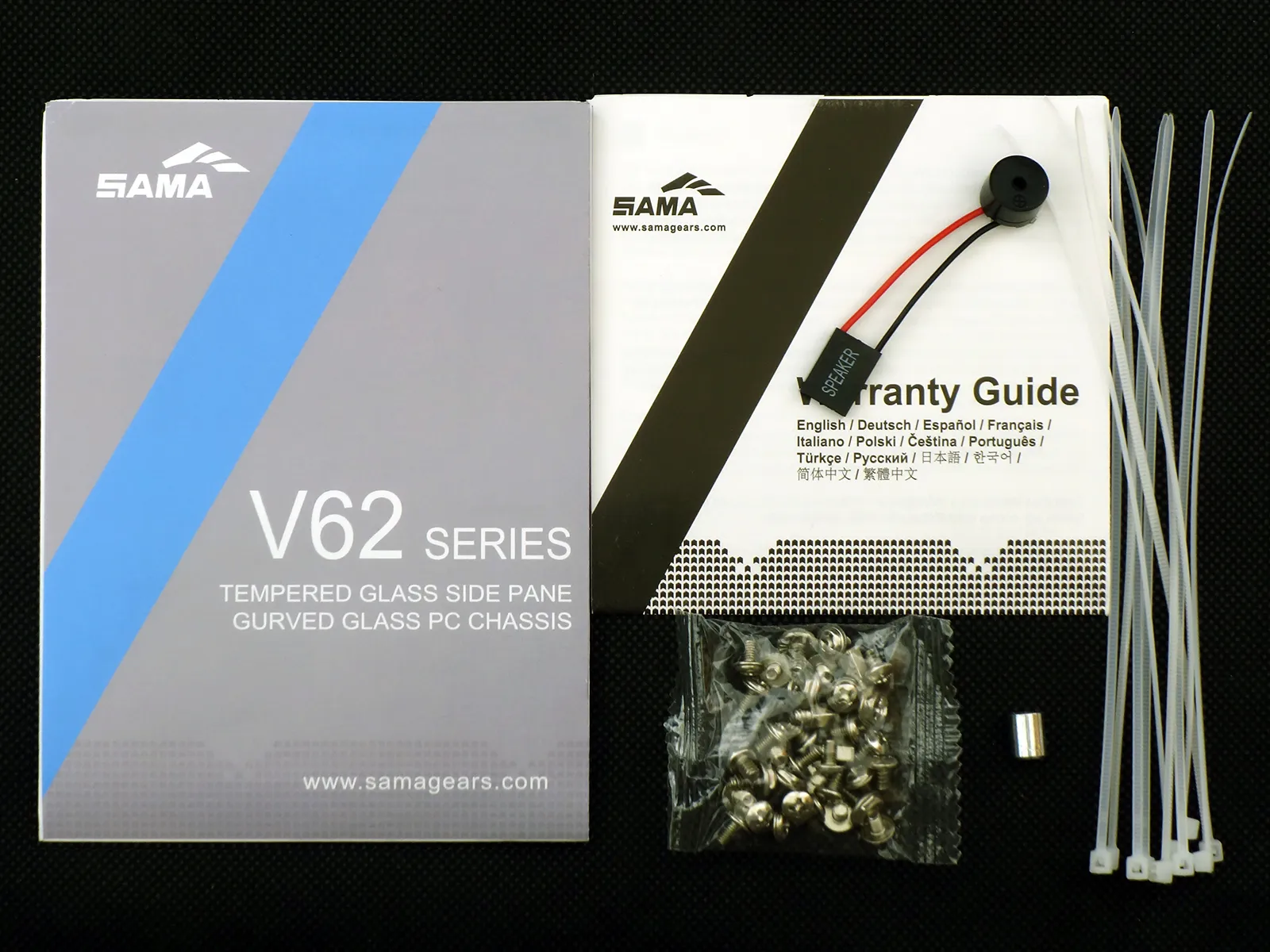
Delivered with only six motherboard standoffs installed, Sama adds the other three to the bag of screws in its V62 installation kit (encouraging those with a tenth mounting hole to ignore it). A Phillips #2-drive standoff socket, PC (beep code) speaker and bundle of zip ties are also included.
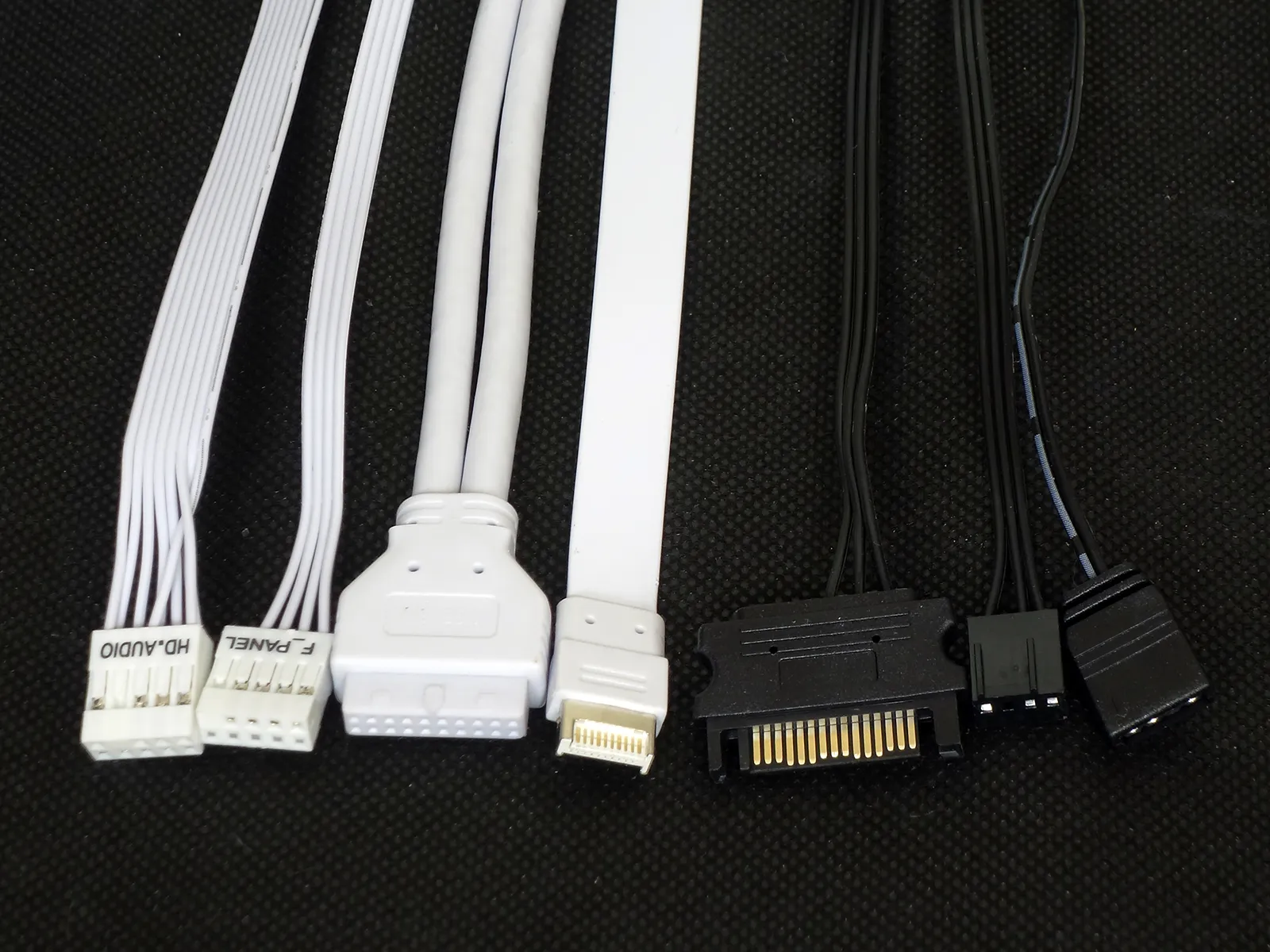
The V62 chassis connects to our motherboard via HD audio for the headset jack, a combined F-Panel block for the power button and LED, a 19-pin first-gen USB3 connection for its two Type A ports and a Gen2x2 cable for its one Type-C. The ARGB controller and integrated fan hub is powered by an SATA drive cable from the power supply and receives motherboard signals via PWM fan and ARGB inputs.
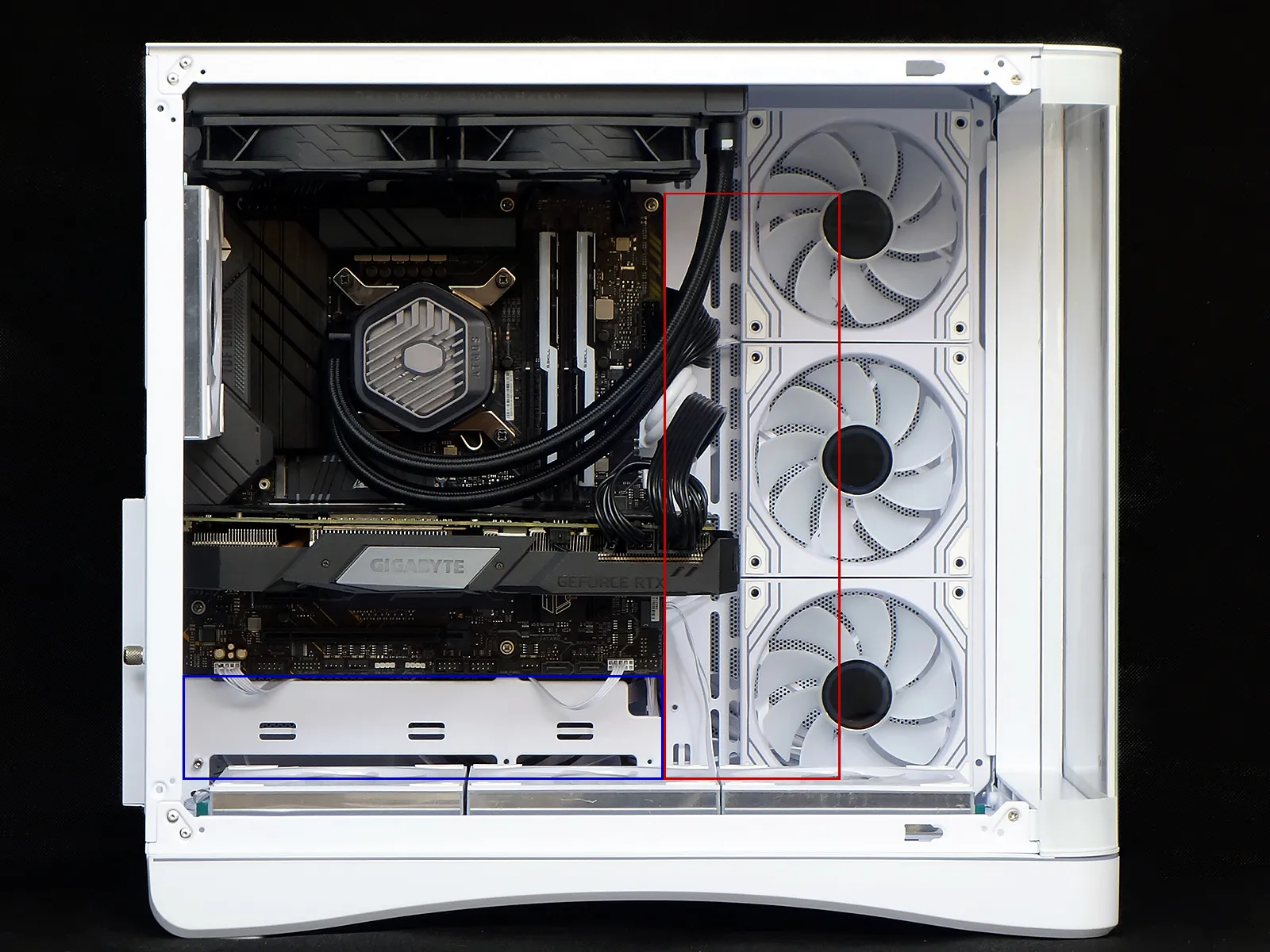
We’ve been using the same platform to test both ATX and Micro ATX cases so that we can compare similar cases of both form factors within a single chart. We marked a blue outline on the extra space that would have made the board full ATX and immediately noticed that the connectors that line the bottom of an ATX board get hidden behind the fans. Marking a red outline around the extra space needed for a 13”-deep EATX board, the only thing preventing anyone from using it is that there’s no place to screw down its front edge: Without any components preventing the installation of such boards, we anticipated that builders would choose not to cover the V62’s side fan edges theirs and used the 11.5” distance between those fans and the back of our case as the motherboard depth of our features table.
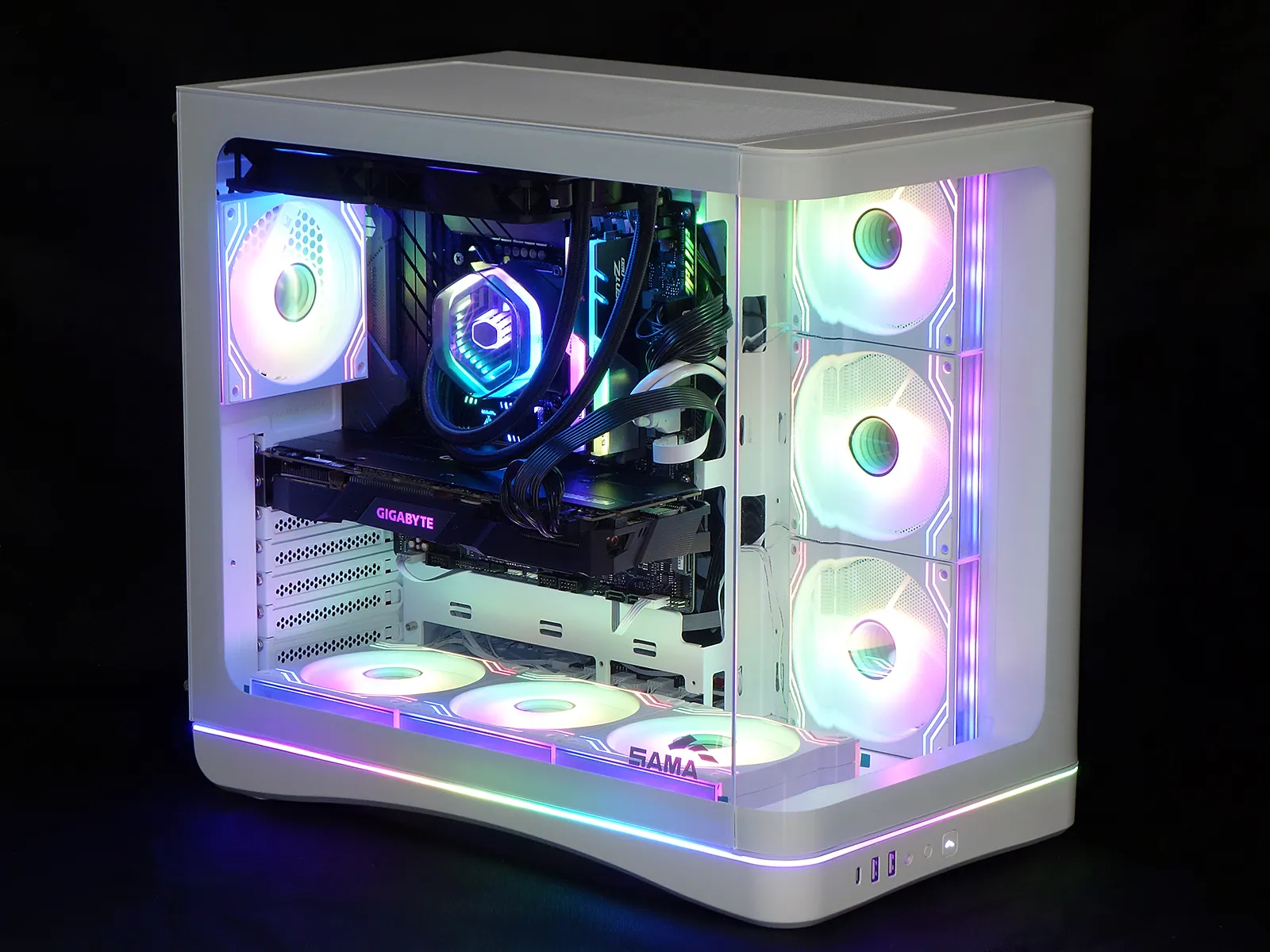
ARGB is a little difficult for us to shoot against a white case, but we threw a few photography and editing tricks to at least show a washed-out version of the high-contrast colors we saw. The only thing we find missing from a visual perspective is that the ARGB strip ends where the front panel ends.
Testing The Sama V62 White
Here’s a short list of the components used in today’s build and the settings used to test it.
| System Configuration | |
| CPU | Intel Core i9-12900KF: 16C/24T, 3.2-5.2 GHz, 30 MB L3 Cache, LGA 1700 Fixed at 4.9GHz (P-cores, 3.7GHz E-cores) and 1.30V |
| CPU Cooler | Cooler Master MasterLiquid 240 Atmos closed-loop |
| Motherboard | Asus B660M Plus WiFi D4, BIOS 2402 (04/20/2023) |
| Hard Drives | Patriot Viper VPR400 1.0 TB M.2 SSD |
| RAM | G.Skill TridentZ Neo DDR4-3600 C16, 2x 8GB |
| Graphics | Gigabyte GeForce RTX 2070 Gaming OC 8G: GeForce RTX 2070 1815 MHz GPU, GDDR6-14000, Maximum Fan |
| Power | Cooler Master XG 750 Plus Platinum: Fully modular, 80Plus Platinum |
| Test Configuration | |
| Load Software | AIDA 64 Engineer Version 6.88.640, Stress CPU, FPU, Cache, GPU |
| H/W Monitoring | HWiNFO64 v7.42-5030 |
| SPL Monitoring | Galaxy CM-140 SPL Meter: Tested at 1/4 m, corrected to 1 m (-12 dB) |
Comparison cases include the Paean C7 as the closest in our collection, the 2500X as the second closest despite its Micro ATX motherboard limitation, the V1000R Mini as the third closest thanks to its glass face and triple side fans, and the Hussar Plus since it’s the only other case we’ve tested with this platform to include a solid front panel. Since it was recently tested and produced comparable temperatures, SilverStone’s traditional Seta H2 acts as a placeholder.
V62 Performance Results
Likely owing to its inclusion of more fans than competing models, the V62 White takes all comers in CPU and GPU temperatures. It drops to second place in voltage regulator temperature.
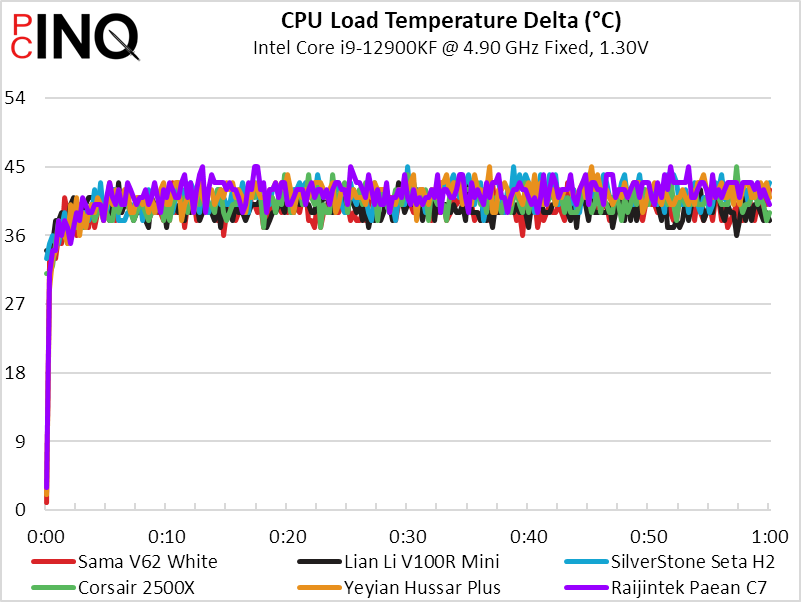
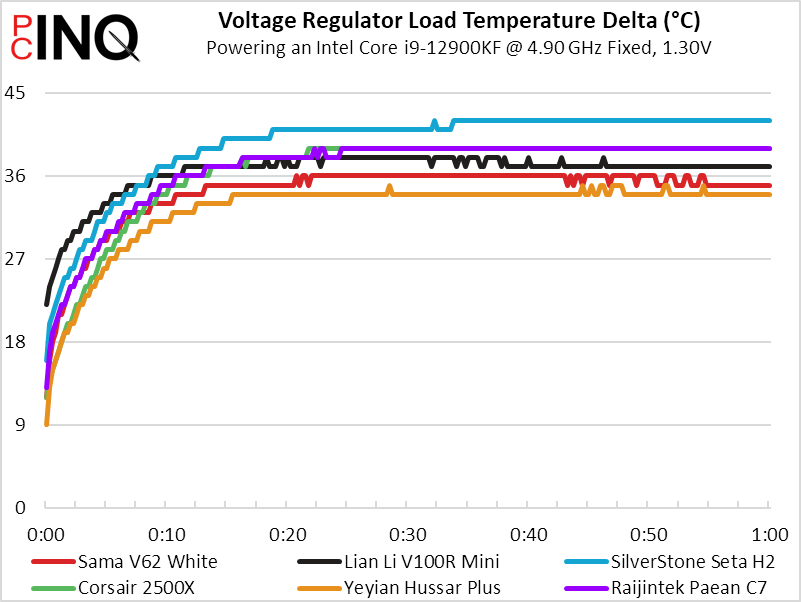
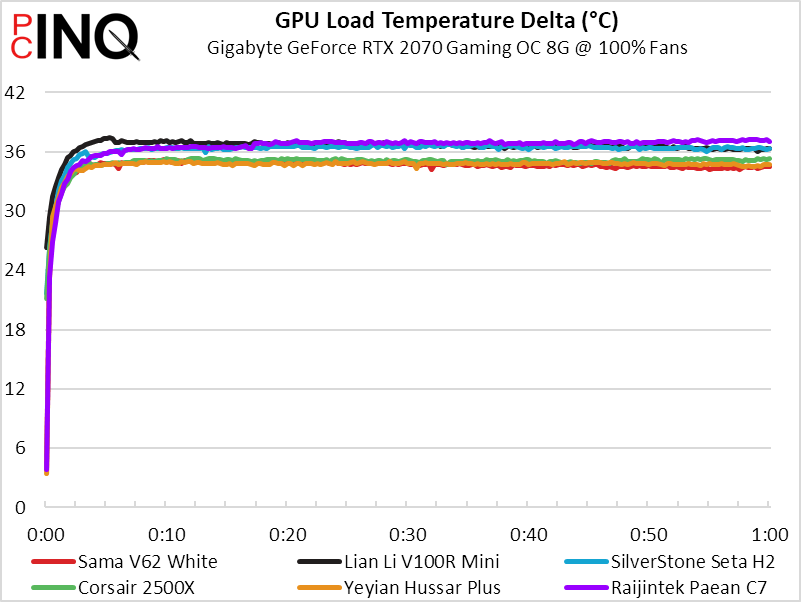
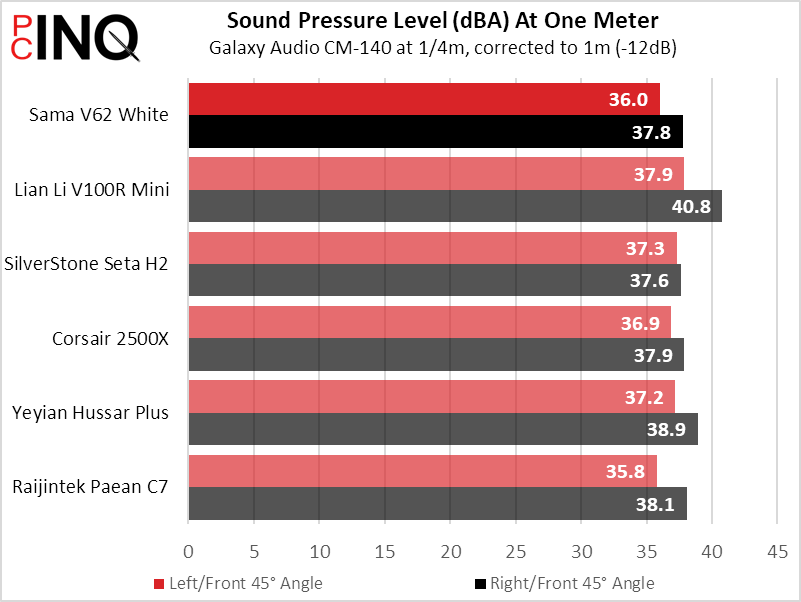
The V62 White also takes top honors on noise suppression despite its extra fans. While lower flow typically corresponds to a low-noise fan design, Sama appears to have balanced this fact against another, that the V62 would ship with seven fans, when optimizing the case’s hardware for its desired appearance.
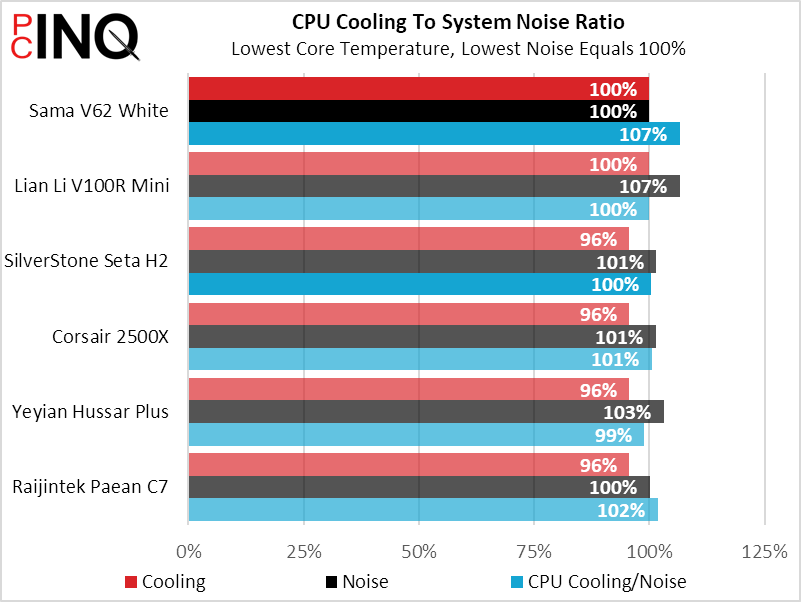
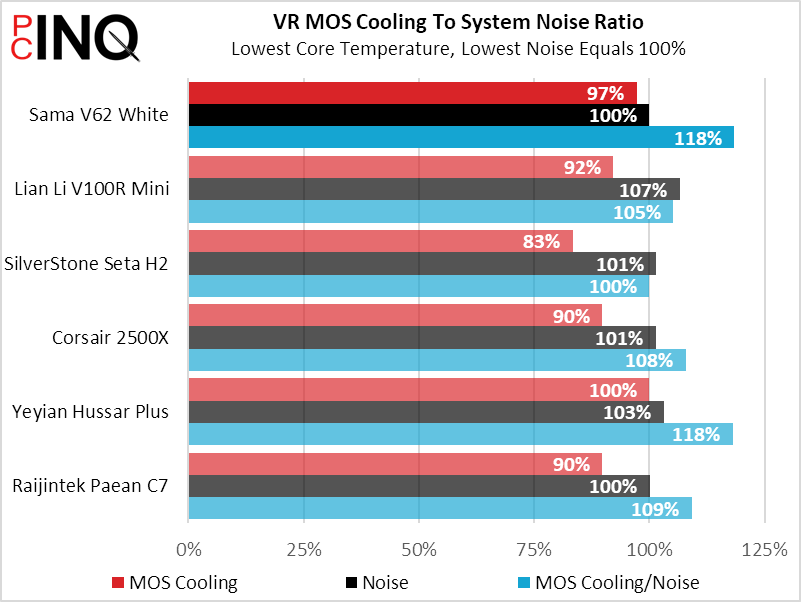
With features like the relatively thin side panels and protruding expansion slot bracket (rather than boxed in) exposing its mainstream roots, price is the hardest knock against the V62 White. While the double-curved face panel’s thicker 4mm tempered glass comes from grander lineage, it’s attached to mainstream panels. And though the seven lighted fans come with their own ARGB controller and hub, those features are also attached to mainstream panels. The expense of adding those features might justify the case being priced twice as high as mainstream versions, but it still feels like a mainstream part.
| Sama V62 White (V62-WHADA7X1-GL) | |
| Pros: | Cons: |
| Mounting space for three large radiators Stylish rounded glass for enhanced component visibility Seven ARGB fans, plus controller and powered hub Quiet fans add low noise to top cooling performance | No dust filtration for intake fans Limited space for drive mounting |
| The Verdict: | |
| The Sama V2 White is the best performing case we’ve tested so far, but that little bit of extra cooling and noise control comes at a high price. | |
Regardless of how we feel about value, topping our charts earns the V62 White an award: It’s not just the most expensive mainstream case we’ve tested, it’s also the best performing.